
Position
Size
Soil
Mulch
Add a thick layer of pine bark mulch, keeping it away from the tree trunk as it may cause excess moisture and damage the trunk. Pine bark will retain the moisture in the soil and will assist in preventing weeds from taking over.
Watering
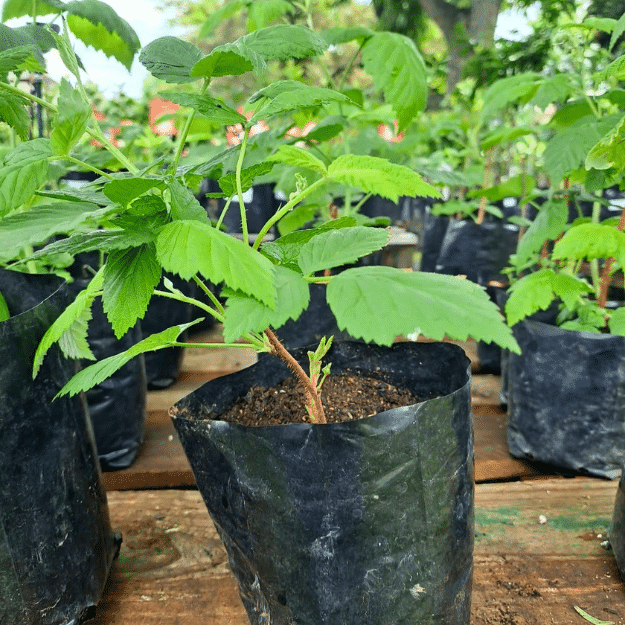
This bramble needs plenty of water, especially during hot weather. In general, you can water your plants twice a week. If the weather is hot and dry, water them daily. Avoid wetting the stems and leaves too much to prevent them from rotting.
Fertilising
Apply one teaspoon of our slow-release berry fertiliser every 4 months.
Pests and Diseases
Good garden hygiene is important. Remove fallen fruit and leaves and keep the area around the plants free of weeds and debris.
Raspberries may be affected by aphids, mites and other pests, as well as fungal diseases, particularly during prolonged wet weather.
Regular applications of Agricultural Neem Oil or Effective Microorganisms (EM Control ) will assist in either prevention or after the fact. If you already have aphids or mites, wash the plant with a harsh hosing, and when dry, spray with Neem oil or EM Control.
Watch for root rot (if overwatered) and fungal infections during wet periods.
Pruning
Cut back dead canes end of Autumn into winter. Prune canes that bore fruit to promote new growth.
Harvesting
Raspberries are ready for harvesting when fully ripe and easily come off the plant when gently tugged. Harvest regularly to ensure you pick them at their peak flavour and quality.


