
Position
Goji berries can be grown in the garden or in a large, deep container of at least 50 litres. They thrive in full sun, which encourages the best fruit production, although they will tolerate partial shade.
Goji plants are hardy and, once established, can tolerate fairly exposed conditions, but young plants will benefit from some protection from strong winds. Allow approximately 1.2–1.5 metres between plants, with additional space between rows to allow for their spreading growth and easy harvesting.
Size
Goji berries grow as vigorous, somewhat unruly shrubs. When regularly pruned, they can generally be maintained at a height of approximately 1–1.8 metres, making the fruit easier to harvest. If left unpruned, mature plants can reach 3 metres or more and can spread considerably.
Soil Type
Goji berries prefer well-draining, slightly alkaline soil, ideally with a pH of approximately 7.0–8.0. They tolerate a range of soil types but perform particularly well in light, loamy soil. The most important consideration is good drainage, as goji plants do not tolerate constantly wet or waterlogged roots.
When growing goji berries in containers, use a well-draining potting mix. Adding perlite, coarse sand, or grit can improve drainage and help prevent the growing medium from becoming waterlogged.
Volcanic rock dust, which contains naturally occurring minerals and trace elements, can be added to the soil to support soil health.
Watering
Goji berries are relatively drought-tolerant once established, but regular watering will encourage healthy growth and good fruit production.
Water young plants regularly while their root systems establish. Mature plants generally require approximately 2.5 cm of water per week, depending on rainfall, temperature, and soil type. Allow the soil to drain well between waterings and avoid prolonged waterlogging or extreme wet-and-dry cycles.
Mulching
Add a thick layer of pine bark mulch, keeping it well away from the tree trunk (any closer may cause excess moisture and damage the trunk). This will retain the moisture in the soil and will prevent weeds from taking over.
Fertilising
Apply 1 teaspoon of our slow-release nitrogen-rich berry fertiliser every 4 months.
Avoid over-fertilising goji berries, as excessive feeding can encourage vigorous leafy growth at the expense of fruit production.
Pruning
Goji berries do not require heavy pruning when young, but regular pruning helps keep the shrub manageable, improves air circulation and makes harvesting easier.
Remove dead, damaged, weak or crossing branches and thin out congested growth to allow sunlight and air into the centre of the plant. Shorten overly long stems to maintain the desired height and shape.
Goji plants can also produce suckers from their roots. Remove unwanted suckers to prevent the plant from spreading beyond its allocated space.
Pests & Diseases
Goji berries are generally hardy, but they can occasionally be affected by aphids, mites (including goji gall mite) and powdery mildew.
Spraying regularly with Agricultural Neem Oil or Effective Microorganisms (EM Control ) will assist in either prevention or after the fact. Birds may also feed on the ripe berries.
Regularly inspect the leaves and young shoots for signs of pests. If aphids or mites are present, spray the plant thoroughly with water to dislodge them and, once dry, treat with Agricultural Neem Oil or EM Control, following the product directions.
Maintain good garden hygiene by removing fallen fruit, dead leaves and diseased plant material. Good airflow through the plant will also help reduce fungal problems.
Avoid overwatering, as constantly wet soil can cause root problems.
Harvesting
Goji plants can begin producing fruit within 2–3 years, although they generally reach their best production after approximately 3–5 years.
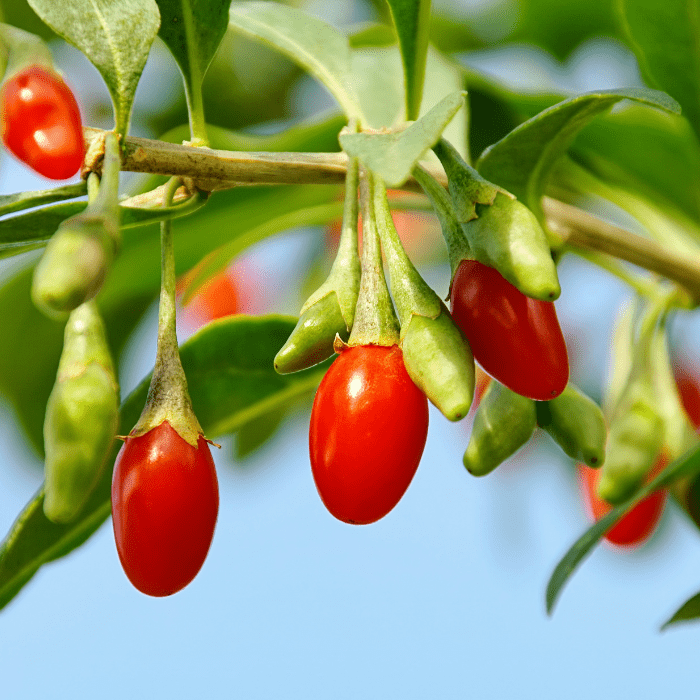
The berries ripen from orange to a vivid red and should be harvested when fully ripe. The fruit is delicate and bruises easily, so pick it carefully or gently shake ripe berries onto a clean sheet beneath the plant.
Enjoy freshly picked berries soon after harvesting, or refrigerate them for short-term storage. You can also freeze or dry goji berries for later use in smoothies, preserves, baking, and desserts.