Position
Partial sunlight or dappled shade.
Size
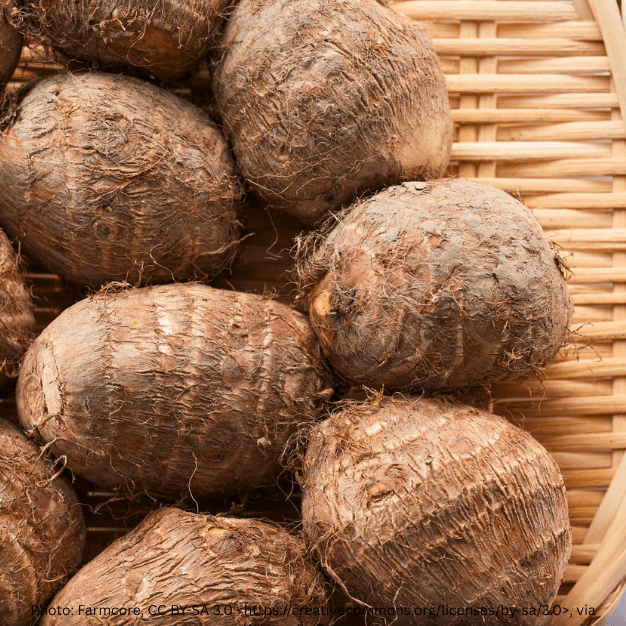
It is a root crop with heart shaped leaves. The tubers need to be planted, at least 5 – 10 cms deep and 100 cm apart after the last frost in spring.
Soil Type
Rich, fertile, well-draining soil with a pH between 5.5 – 6.5. To bring the pH level of soil down, add a bag of acid compost.
Give your plants the best possible start by adding a bag of Volcanic Rock Dust (R25 per bag) to the soil. Volcanic Rock Dust helps replenish essential minerals and trace elements that have been depleted from our soils over time.
We also recommend adding a bag of Superfrass (R25 per bag) when planting. Superfrass provides a natural source of NPK and micronutrients to encourage strong, healthy growth, while also helping to improve the plant’s natural resistance to pests.
Together, these products help create a nutrient-rich growing environment and give your plants the foundation they need to establish and thrive.
Watering
Taro root requires consistent and deep watering. Can survive in waterlogged or boggy soil for a short period.
Mulching
Add a thick layer of pine bark mulch, keeping it about 20 to 30 centimetres away from the tree trunk (any closer may cause excess moisture and damage the trunk). Pine Bark mulch helps retain moisture in the soil and prevents weeds.
Fertilising
Apply 1 teaspoon every 4 months of our slow-release all-plant fertiliser. The roots will absorb what they need. Supplement with potassium if necessary.
Harvesting
Taro root will be ready to harvest 7 to 12 months after planting. It’s time to harvest when the leaves turn yellow and die back. Carefully lift the tubers from the ground without damaging them.
Pests & Diseases
Susceptible to root rot, so make sure that the plants don’t lie in deep water for too long. Best to keep a watch and preferably use preventative measures by spraying with agricultural Neem Oil or Effective Microorganisms (EM Control)