Position
Prefers warm, humid, tropical climates. Ideal range: 22–35°C. Cannot tolerate frost; young trees are particularly susceptible to cold temperatures.
The best site is in full sun, protected from strong winds (which can damage flowers and fruit). Plant trees 10–12 m apart to allow canopy spread. Best planted at the start of the rainy season.
Soil
Deep, well-drained, loamy soils. Slightly acidic to neutral (pH 5.5–6.5). Avoid waterlogged or alkaline soils; roots are prone to rot in standing water. Mix at least one bag of acid compost and organic matter before planting to improve fertility.
Adding half a bag of Volcanic Rock Dust and a bag of Superfrass will help promote rapid growth. Theses two products also protect the roots from being eaten by insects.
Watering
Newly planted trees require consistent watering, but the soil should not be overly wet.
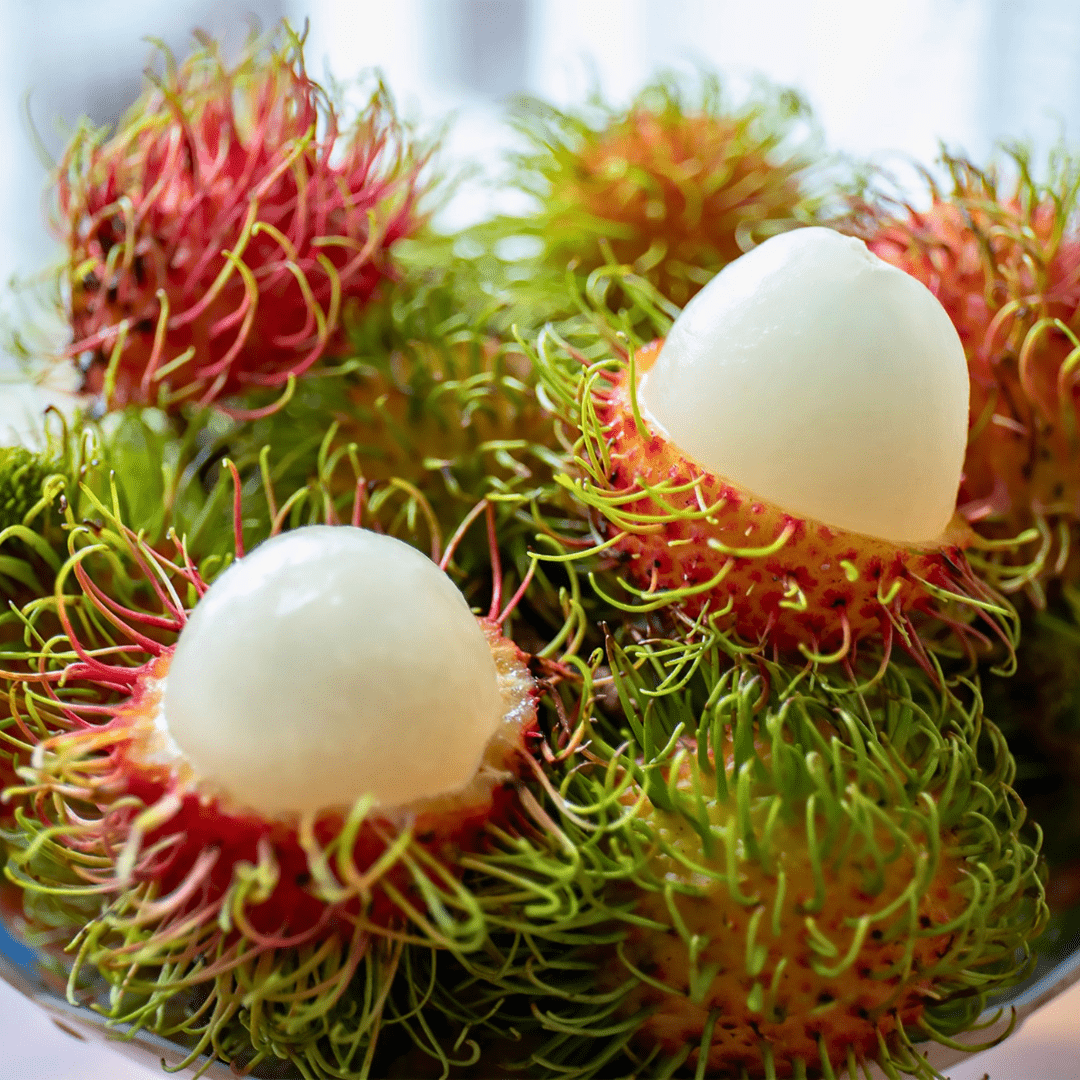
A Rambutan tree needs at least 1 inch of water per week, but the exact amount depends on the growth stage and rainfall. Water deeply in the morning, ensuring the soil remains consistently moist but never waterlogged. Regular, smaller waterings are better than a single, deep soaking.
Mulch
Add a thick layer of Pine Bark Mulch, keeping it about 20 to 30 centimetres away from the tree trunk (any closer may cause excess moisture and damage the trunk). Pine Bark mulch helps retain moisture in the soil and prevents weeds.
Fertilising
Apply 3 teaspoons every 4 months of our slow-release all-plant fertiliser. The roots will absorb what they need.
Pruning
Allow the fruit to remain on the tree until it is fully coloured and beautifully sweet for the best flavour and quality. Harvest whole fruit clusters using pruning shears or a long-handled pruning pole. Avoid pulling individual fruits, as damaged skins spoil more quickly.
Pick during the cool early morning or late afternoon to help keep the fruit fresh and prevent moisture loss.
Protect ripening fruit by covering trees with netting a few weeks before harvest to reduce damage from birds, bats, and squirrels.
Pests & Diseases
Susceptible to many pests and diseases. Best to keep a watch and preferably use preventative measures by spraying with agricultural Neem Oil or Effective Microorganisms (EM Control)