Position
Plant your gooseberries in full sun, if possible. They will also tolerate partial shade, particularly in areas with very hot summers. Choose a position that is sheltered from strong winds.
Established gooseberry bushes are reasonably cold-hardy, but late frosts can damage the flowers and young developing fruit. Although gooseberries can tolerate short dry periods, regular watering is important for healthy growth and good fruit production.
Size
A mature gooseberry bush will grow to approximately 1.2 to 1.5 metres in height, with a similar spread. Give your new plants plenty of room to grow and allow good air circulation around the bushes.
Soil
Gooseberries grow best in fertile, well-drained loamy to sandy soil that retains some moisture without becoming waterlogged. A slightly acidic to neutral soil with a pH of approximately 5.5 to 7.0 is ideal.
If your soil is very sandy, mix in good-quality organic compost or potting soil to improve its ability to retain moisture and nutrients.
Volcanic Rock Dust contains more than 72 minerals and trace elements that nourish the soil returning it to a healthy, rich state.
Watering
Keep the soil around your bush moist during the growing season. It can tolerate drought but will not fruit during one.
Water only the soil, not the leaves, as this encourages pests and diseases.
Mulching
Add a thick layer of pine bark mulch, keeping it away from the tree trunk as it may cause excess moisture and damage the trunk. This will retain soil moisture and prevent weeds from taking over.
Fertilising
Apply 1 teaspoon of our slow-release nitrogen-rich berry fertiliser every 4-5 months. Avoid excessive nitrogen, as this can encourage vigorous leafy growth at the expense of fruit production.
Watering
Keep the soil around your gooseberry bush consistently moist during the growing and fruiting season. Although established plants can tolerate short periods of drought, prolonged dry conditions can reduce fruit production and affect berry size and quality.
Water deeply around the base of the plant rather than wetting the foliage. Keeping the leaves dry can help reduce the risk of fungal diseases.
Pruning
Cut away dead canes in the winter.
Pests and Diseases
Good garden hygiene is an important part of preventing pests and diseases. Remove fallen leaves, damaged fruit and other plant debris from around the base of the bush. Watch for fungal diseases during prolonged wet or humid periods. Good airflow, sensible watering and avoiding constantly wet foliage will help reduce the risk of infection
Aphids, mites and other common garden pests may occasionally affect gooseberries. If aphids or mites are present, they should be removed first with a strong spray of water. Once the foliage has dried, treat the plant with
Agricultural Neem Oil or Effective Microorganisms (EM Control) Spray regularly as a preventative.Root rot can occur if plants are grown in poorly drained or waterlogged soil.
Harvesting
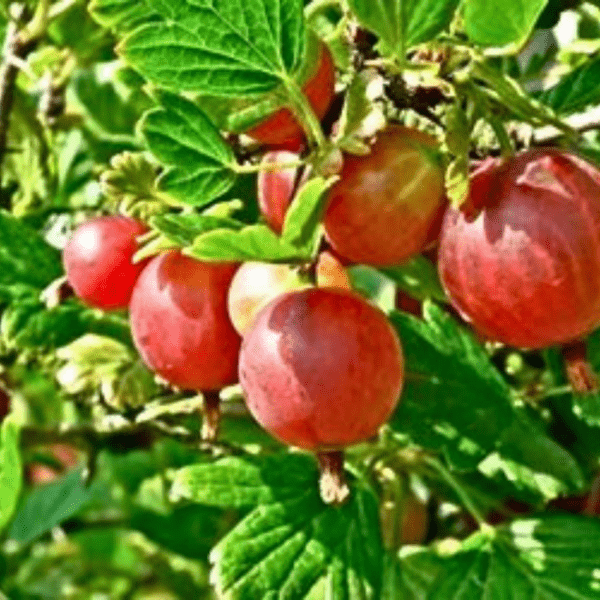
Gooseberries can be harvested at different stages depending on how you intend to use them.
For cooking, preserves and jams, pick the berries while they are still firm and slightly underripe. For eating fresh, allow them to ripen fully on the bush. Ripe gooseberries will become softer and sweeter as they mature.
Gently squeeze the berry to check for ripeness. A ripe gooseberry intended for fresh eating should have a slight give when pressed but should not be excessively soft or mushy.