
Position
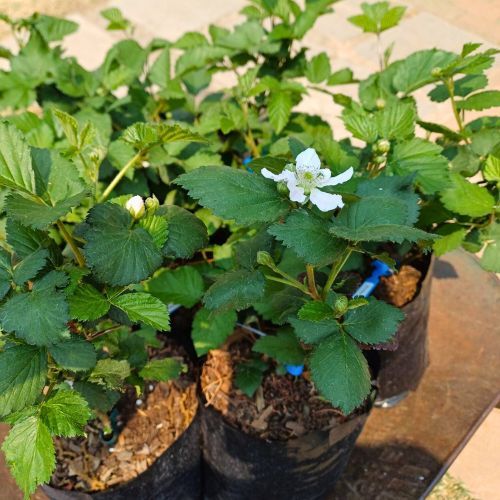
Arapaho Thornless Blackberry bush enjoys full sun and part shade. For best results, plant it in a sheltered, sunny position. Although they can tolerate some afternoon shade, the yield would be better in full sun.
Size
These bushes can grow to about 1-2 meters tall, with a width of 1m. Plant these bushes about 1m apart for best results.
Soil Type
This berry plant enjoys organic-rich, slightly acidic, moist, well-drained soil. The BlackBerry kit consists of:
1 Arapaho Blackberry Bush
1 Pine bark Mulch
Dig a 50cm x 50cm deep hole and add a bag of acid compost. Mix the berry mix and volcanic rock dust into the top section of this soil. Make a small hole and plant, ensuring you don’t plant higher than the soil level in the bag. Then, add the pine bark mulch on top, keeping it away from the plant’s stem. Place the plant directly into the soil mixture and cover it with pine bark mulch.
We stock volcanic rock dust, which contains organic minerals and trace elements to boost soil health and increase important micro-organisms essential for healthy soil.
Watering
Blackberries dislike waterlogged soil. Keep the top inch of soil moist for the first 2-3 weeks. Give it a good soaking every 2 – 3 days if there’s been no rain during the summer. During the winter, water lightly twice a week.
Mulching
To maintain soil acidity, apply a good organic mulch, such as pine bark, around the plant every few months. Keep the mulch away from the stem of the plant.
Fertilising
Apply 1 teaspoon of our slow-release nitrogen-rich berry fertilizer every 4-5 months.
Pests and Diseases
Spraying regularly with Agricultural Neem Oil or Effective Microorganisms (EM Control) will assist with prevention or after-the-fact control. If you already have aphids or mites, wash the tree with a harsh hosing, and when dry, spray with Neem oil or EM Control.
Practice good garden hygiene (remove fallen fruit and leaves).
Watch for root rot (if overwatered) and fungal infections during wet periods.
Pruning
- Prune erect blackberries twice yearly.
- During summer, pinch out the tips of new canes when they reach about 90cm to promote side branch growth.
- Prune again in late winter by removing, at ground level, all the canes that fruited the previous season.
- Remove any young canes that are crowded, spindly, or diseased, and shorten the fruiting laterals to 30-45cm.
Harvesting
When the fruit turns black, you can begin harvesting. The ripest berries (sweetest) are a deep, shiny black and should be picked for eating fresh.