Position
Plant your tree in full sun and allow plenty of space around it to allow it to spread (at least 6 metres). Because this is a larger tree, trying to grow it in a pot isn’t recommended. The fruits attract birds, which are always welcome additions to the garden.
Size
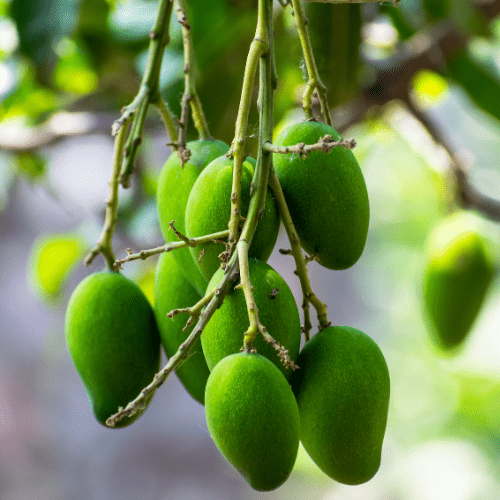
Sabre mango trees are big, reaching a height of about 4mts, with a similar spread.
Soil type
Mulching
Apply organic mulch to your tree all year round.
Use from 2 to 5 centimetres of pine bark mulch to protect the roots from UV damage and drying out. It retains moisture, and maintains an optimal pH. Do not let the mulch touch the plant stem, as it may cause infection or rot.
.Watering
Because mangoes are accustomed to tropical areas (as opposed to dry areas), they do best with moderate watering. Water the plant generously so the soil is very wet, allowing the water to reach the deep tap root. Then, wait until the top 10 cms of soil completely dries out before watering again. Be especially vigilant and cease watering from when the first buds appear to when they have fully opened.
Pruning
Remove branches that are diseased or dead, as well as those that are cluttering the canopy. You can also prune your tree to a desired height.
Fertilising
Just before flowering, use a rapid-release nitrogen fertilizer to boost the health and abundance of fruit and flowers. Use our slow-release nitrogen-rich all plant fertiliser Apply 1 teaspoon every 4-5 months. The roots will absorb what they required.
Pests and Diseases
Harvesting
It’s time to pick your sweet Sabre mangoes when firm, but give in under pressure from a thumb and will have a red blush on the otherwise yellow skin. This variety is usually available between November and January. To pluck it from the tree, give a gentle tug downwards.