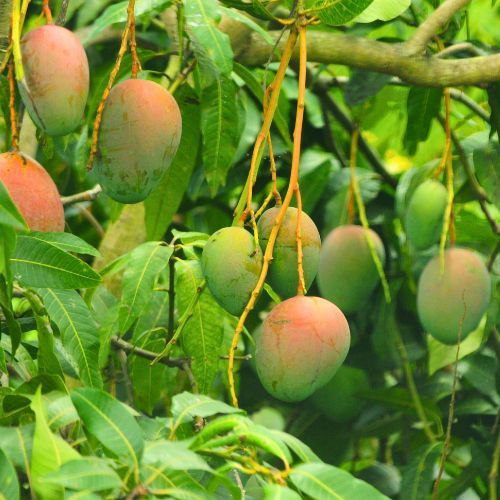
Position
The Heidi mango thrives in full sun. Space about eight mts apart from other trees. This allows the tree space to spread and grow. It is a big tree and shouldn’t be grown in a pot. Mangoes thrive in temperatures between 10°C and 35°C, and are sensitive to frost and wind.
Size
This mango tree grows to a height of about 4 to 9 mts with a spread of 4 mts, depending on its growing conditions. However, you can prune it in summer and again in winter to prevent it from becoming too big for your space. You can also stake the branches horizontally to the ground.
Soil type
The Extrema mango thrives in sandy soil rich in organic matter and drains well, with a pH of between 5.5 and 7.5. The hole should be deep because the tree’s roots extend far down. Add a bag of acid compost to your soil.
Watering
Water your Heidi mango tree every 2 to 3 days in the summer and every 2 to 3 weeks in the winter (if at all). When you first plant your young tree, you may need to water it a little more frequently for a few weeks. This helps to establish it and prevent the root ball from drying out.
Mulching
Apply organic mulch to your tree year-round.
Use from 2 to 5 centimetres of pine bark mulch to protect the roots from UV damage and drying out. It retains moisture and maintains an optimal pH. Do not let the mulch touch the plant stem, as it may cause infection or rot.
Fertilising
Just before flowering, use a rapid-release nitrogen fertilizer to boost the health and abundance of fruit and flowers/dig in some aged manure if available. Use our slow-release, nitrogen-rich all-purpose plant fertiliser. Apply 1 teaspoon every 4-5 months. The roots will absorb what they require.
Pruning
Remove dead and diseased branches to give your mango tree the best conditions under which to produce the healthiest fruit. For the best results, prune your tree to have only three or four main branches and plenty of space in the canopy.
Pests and Diseases
Aphids, citrus psylla, red scale, citrus greening. Spraying regularly with Agricultural Neem Oil or Effective Microorganisms (EM Control) will assist with prevention or with after-the-fact control. If you already have aphids or mites, wash the tree with a harsh hosing, and when dry, spray with Neem oil or EM Control.
Practice good garden hygiene (remove fallen fruit and leaves).
Watch for root rot (if overwatered) and fungal infections during wet periods.
Harvesting
Pick your juicy fruit about 4 or 5 months after the tree has flowered.