

Position
Cacao trees thrive in hot, humid climates and will even do well in a greenhouse. Cacao trees prefer areas with full sun. Plant at least 3m apart.
Size
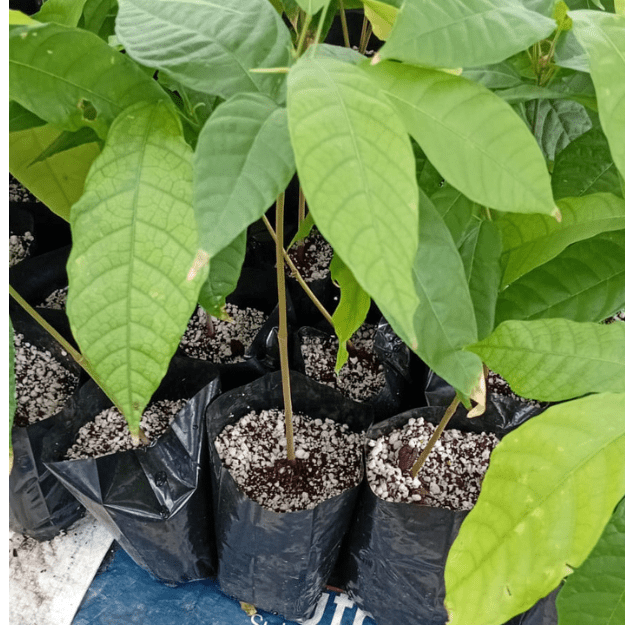
A mature cacao tree can grow to between 6 and 9 metres tall with a spread of up to 1 metre.
Soil
Cacao trees can withstand both acidic and alkaline soil with a pH between 5 and 7.5. Soil should be loamy, moist, and well-drained.
Superfrass (R25 per bag) is a natural, high-quality organic growth enhancer and pesticide that can be added when planting.
Watering
Cacao trees require plenty of water, so ensure you water them regularly.
Mulching
Add a thick layer of pine bark mulch, keeping it about 20 to 30 centimetres away from the tree trunk (any closer may cause excess moisture and damage the trunk). This will retain soil moisture and prevent weeds from taking over.
Fertilising
Apply our slow-release all-plant fertiliser. Apply 1 teaspoon every 4-5 months. The roots will absorb what they need
Pruning
The first pruning will occur just after the main harvest and before the rainy season. Whilst a second pruning will be needed five months later. Pruning aims to give the cacao tree a structure that will help maximize its production.
Pests and Diseases
Aphids, citrus psylla, red scale, citrus greening. Spraying regularly with Agricultural Neem Oil or Effective Microorganisms (EM Control) will assist in prevention or in after-the-fact control. If you already have aphids or mites, wash the tree with a harsh hosing, and when dry, spray with Neem oil or EM Control.
Practice good garden hygiene (remove fallen fruit and leaves).
Watch for root rot (caused by overwatering) and fungal infections during wet periods.
Harvesting
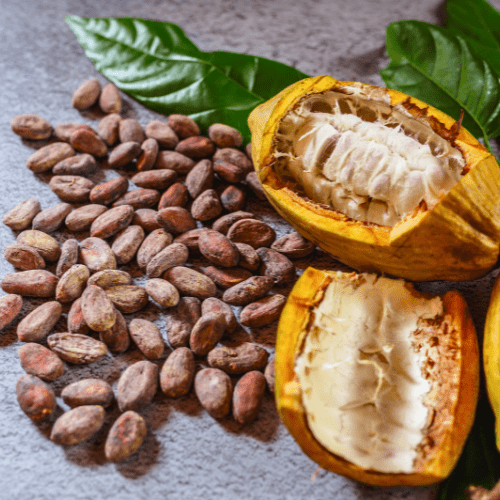
Cocoa beans will grow from the trunk and branches of the cacao tree. Pods are harvested manually by making a clean cut through the stalk. Harvest the cocoa by removing ripe pods from the tree and opening them to extract the wet beans.


