Position
Thornless blackberries enjoy full sun but can tolerate some partial shade. For the best growth and fruit production, plant them in a sheltered position with plenty of sunlight. They can tolerate some afternoon shade, particularly in very hot areas, but will generally produce a better crop in full sun.
Size
Thornless blackberry plants can grow between 1 and 2 metres tall, depending on the variety and growing conditions. Most varieties benefit from support on a trellis or fence.
Plant the vines approximately 1.5 metres apart to allow enough space for healthy growth and good air circulation.
Soil Type
Blackberries prefer organically rich, slightly acidic, moist but well-drained soil. Avoid areas where water collects, as blackberry roots do not tolerate waterlogged conditions.
Soil Type
This berry enjoys organic rich, slightly acidic, moist, well-drained soil.
The blackberry kit consists of:
1 Thornless Blackberry
1 Berry Mix
1 Pine Bark Mulch
1 Volcanic rock dust
Dig a hole approximately 50cm x 50cm x 50cm. Add a bag of compost or acid compost and mix it well with the existing soil. Mix the Berry Mix and Volcanic Rock Dust into the top section of the prepared soil.
Make a hole large enough for the plant and place it at the same soil level as it was growing in the nursery bag. Do not bury the stem deeper than its original level.
Water thoroughly after planting,, then finish with a layer of Pine Bark Mulch, keeping the mulch away from the stem.
Volcanic Rock Dust, contains organic minerals and trace elements to boost soil health and increase important micro-organisms essential for healthy soil.
Watering:
Blackberries enjoy consistently moist soil but dislike waterlogged conditions.
For the first 2–3 weeks after planting, keep the soil moist while the plant establishes. During summer, if there has been no rain, water thoroughly every 2–3 days, adjusting for weather and soil conditions.
During winter, reduce watering considerably, particularly if the plant is dormant. Water only when necessary to prevent the soil from drying out completely.
Mulching
To maintain the soil acidity, apply good organic mulch, like Pine Bark, around the plant every few months. This helps retain soil moisture, suppress weeds and maintain suitable soil conditions. Replenish the mulch as needed, and always keep it a few centimeters away from the stems.
Fertilising
Apply 1 teaspoon of our slow-release Berry Fertiliser every 4-5 months.
Pests and Diseases
Blackberries are generally easy to grow but may occasionally be affected by aphids, mites, thrips and other sap-sucking insects. Fungal diseases can also occur, particularly during prolonged wet or humid conditions.
Agricultural Neem Oil or Effective Microorganisms (EM Control ) will assist in either prevention or after the fact. If you already have aphids or mites, wash the tree with a harsh hosing, and when dry, spray with Neem oil or EM Control.
Good garden hygiene is important. Remove dead or diseased leaves, old fruit and infected plant material from around the plant.
Avoid overwatering and poorly drained soil, as these conditions can encourage root rot. Good spacing and air circulation also help reduce fungal problems.
Pruning
Pruning encourages healthy new growth and improves fruit production.
- During summer, pinch or prune the tips of vigorous new canes when they reach approximately 90cm–1.2m to encourage lateral branching.
- After harvesting or during winter dormancy, remove at ground level the canes that have already produced fruit. These canes will not fruit again.
- Retain the strongest healthy new canes, as these will produce the following crop.
- Remove weak, damaged, diseased or overcrowded canes.
- Shorten long lateral branches where necessary to keep the plant manageable and encourage good-quality fruit.
Harvesting
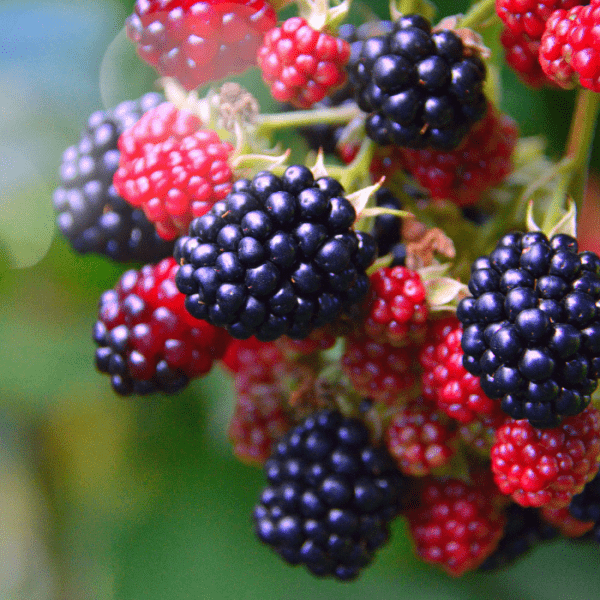
Blackberries are ready to harvest when they have changed from red to a deep black colour and come away easily from the plant.
Fully ripe berries should be plump, juicy and deep black. Pick regularly as the berries ripen, as not all the fruit on the plant will ripen at the same time.
For the best flavour, allow blackberries to ripen fully on the plant before picking.