Position
Full sun or partial shade. Best suited to a tropical climate, so should be covered in winter to protect the plant from cold and frost.
Size
This vegetable is grown from tubers and should be planted at least 1 metre apart. The large leaves can grow up to 2 metres tall.
Soil Type
Thrives in deep, rich, well-draining soil.
Give your plants the best possible start by adding a bag of Volcanic Rock Dust (R25 per bag) to the soil. Volcanic Rock Dust helps replenish essential minerals and trace elements that have been depleted from our soils over time.
We also recommend adding a bag of Superfrass (R25 per bag) when planting. Superfrass provides a natural source of NPK and micronutrients to encourage strong, healthy growth, while also helping to improve the plant’s natural resistance to pests.
Together, these products help create a nutrient-rich growing environment and give your plants the foundation they need to establish and thrive.
Watering
Regular, consistent moisture is essential for the plant’s health, especially when it is young. Avoid waterlogging, as it can lead to root rot. Do not allow the roots to dry out, as this can cause the plant to wilt and die.
Mulching
Add a thick layer of pine bark mulch, keeping it about 20 to 30 centimetres away from the leaves (any closer may cause excess moisture and damage the t). Pine Bark mulch helps retain moisture in the soil and prevents weeds.
Fertilising
Apply a potasium rich fertiliser every 4 months. This plant does not need nitrogen.
Pruning
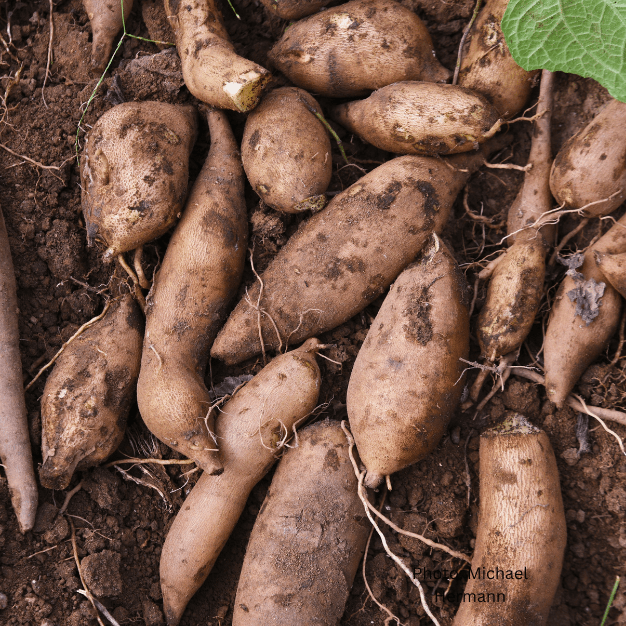
These are perennials, meaning that the leaves will dry in winter. This is the time to remove the tubers for propagating and storing until replanting in spring.
Practice good garden hygiene (remove fallen leaves).
Watch for root rot (if overwatered) and fungal infections during wet periods.
Harvesting
Pests & Diseases
Yacon is naturally resistant to many pests due to the protective compounds and fine hairs (trichomes) on its leaves. However, it can occasionally be affected by chewing insects such as caterpillars and slugs, as well as root-damaging nematodes. Regular monitoring is recommended, and preventative treatments with agricultural Neem Oil or Effective Microorganisms (EM Control) can help keep plants healthy and pest free.