


Position
Plant your Kent mango tree in full to partial sun, where natural light can warm and sweeten the fruits. Allow plenty of room around your tree to let the canopy spread. Mangoes thrive in temperatures between 10°C and 35°C, and are sensitive to frost and wind.
Size
This tree grows to a height of around 4-5 metres, with a canopy of similar width.
Soil Type
This tree thrives in basic soil with a pH of 6.0 to 7.2. It is fairly hardy and only really requires well-draining soil, so it doesn’t retain too much water (which would cause the roots to rot). Having a rich loam deep enough for the roots to extend into it is ideal.
Mulching
Apply organic mulch to your tree year-round.
Use from 2 to 5 centimetres of pine bark mulch to protect the roots from UV damage and drying out. It retains moisture and maintains an optimal pH. Do not let the mulch touch the plant stem, as it may cause infection or rot.
Watering
Mango trees should only really be watered around the flowering period. Water it every 2 or 3 days as soon as flower buds appear. Give your tree 60 to 80 centimetres of water under at least 40% of the canopy area. During the rainy season, let the tree survive just on the rainfall.
Fertilising
An all-purpose, rapid-release fertiliser can be applied to the tree when flowering starts to encourage heavy fruiting. Over-fertilising your mango tree may prevent the fruit and flowers from developing.
Our high-nitrogen slow-release all-plant fertiliser works well with all plants and trees. 1 teaspoon every 4-5 months. The roots will absorb what is required.
Pests and Diseases
Aphids, citrus psylla, red scale, citrus greening. Spraying regularly with Agricultural Neem Oil or Effective Microorganisms (EM Control) will assist in prevention or in after-the-fact control. If you already have aphids or mites, wash the tree with a harsh hosing, and when dry, spray with Neem oil or EM Control.
Practice good garden hygiene (remove fallen fruit and leaves).
Watch for root rot (if overwatered) and fungal infections during wet periods.
Pruning
Trim the tree of dead branches and keep it down to three (max four) main branches for the best results. You should also try to keep the canopy fairly open, not overrun with branches.
Harvesting
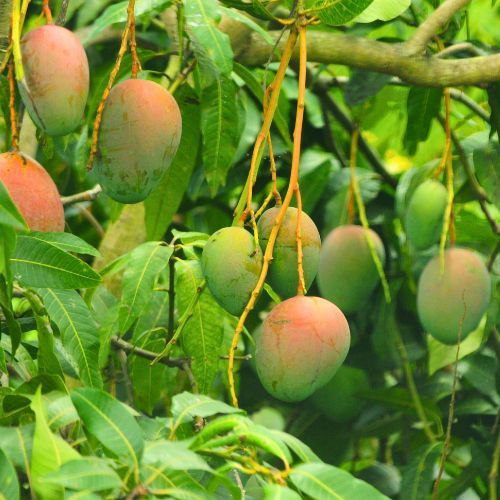
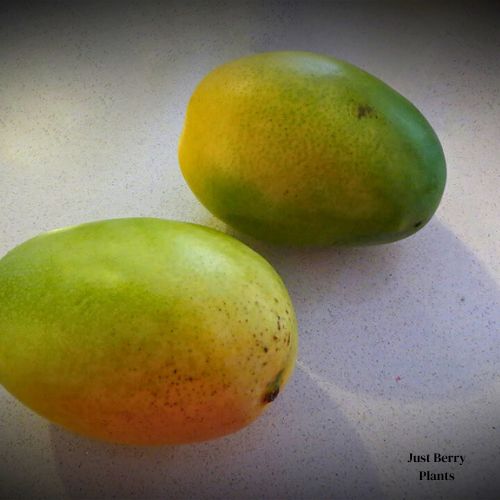
When grafted, Kent mangos can produce fruit in their first year. The mangoes are usually ready to pick 4 or 5 months after the tree has flowered. They should have gorgeous purple-red or red-yellow skin and should not be too firm.