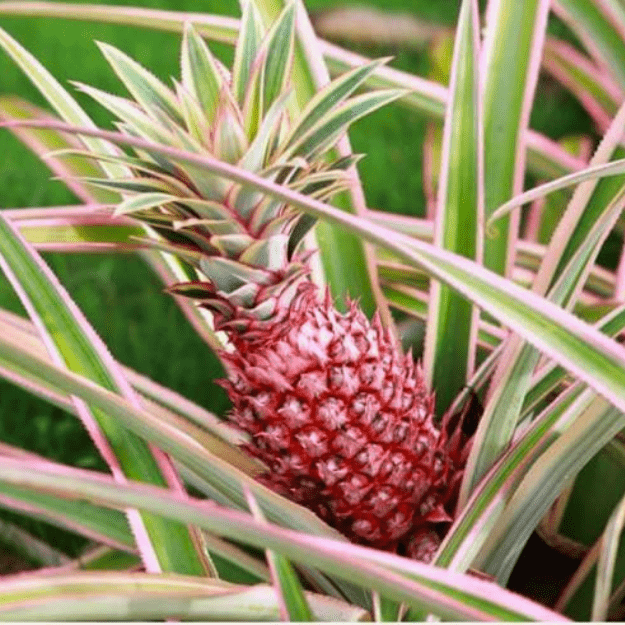
Red Variegated Pineapple Plant (Ananas comosus ‘Variegatus’)
Position
Full sun to light afternoon shade. Best fruit colour and leaf variegation develop in a sunny position.
Full sun to light afternoon shade. Best fruit colour and leaf variegation develop in a sunny position.
Size
Grows 60–100 cm high and 60–90 cm wide.
Grows 60–100 cm high and 60–90 cm wide.
Soil Type
Well-drained sandy or loamy soil enriched with organic matter. Avoid heavy, waterlogged soils.
Well-drained sandy or loamy soil enriched with organic matter. Avoid heavy, waterlogged soils.
Give your plants the best possible start by adding a bag of Volcanic Rock Dust (R25 per bag) to the soil. Volcanic Rock Dust helps replenish essential minerals and trace elements that have been depleted from our soils over time.
We also recommend adding a bag of Superfrass (R25 per bag) when planting. Superfrass provides a natural source of NPK and micronutrients to encourage strong, healthy growth, while also helping to improve the plant’s natural resistance to pests.
Together, these products help create a nutrient-rich growing environment and give your plants the foundation they need to establish and thrive.
Watering
Water regularly during establishment. Once established, water deeply when the soil begins to dry. Allow excess water to drain freely.
Water regularly during establishment. Once established, water deeply when the soil begins to dry. Allow excess water to drain freely.
Mulch
Apply a 5–10 cm layer of pine bark mulch around the root zone, keeping it clear of the plant’s crown..Mulch helps conserve moisture, regulate soil temperature, and improve soil fertility.
Fertilising
Apply 1 teaspoon every 4 months of our slow-release all-plant fertiliser. The roots will absorb what they need.Supplement with a small amount of well-rotted manure to encourage healthy growth and abundant fruit production.
Apply 1 teaspoon every 4 months of our slow-release all-plant fertiliser. The roots will absorb what they need.Supplement with a small amount of well-rotted manure to encourage healthy growth and abundant fruit production.
Pruning
Remove dead or damaged leaves as required. After harvesting, the mother plant will gradually decline while producing suckers, which can be removed and replanted to produce new plants.
Remove dead or damaged leaves as required. After harvesting, the mother plant will gradually decline while producing suckers, which can be removed and replanted to produce new plants.
Harvesting
Fruit is ready to harvest 5 to 6 months after flowering, when the bse of the fruit changes from green to golden yellow, the fruit should be fragrant and yield slightly to gentle pressure. Cut the fruit from the plant with a short section of stem attached.
Fruit is ready to harvest 5 to 6 months after flowering, when the bse of the fruit changes from green to golden yellow, the fruit should be fragrant and yield slightly to gentle pressure. Cut the fruit from the plant with a short section of stem attached.
Pests & Diseases
Generally hardy but may occasionally be affected by mealybugs, scale insects, mites, and nematodes. Root rot can occur in poorly drained soils. Good air circulation and well-drained growing conditions help prevent most problems.
Generally hardy but may occasionally be affected by mealybugs, scale insects, mites, and nematodes. Root rot can occur in poorly drained soils. Good air circulation and well-drained growing conditions help prevent most problems.
Preferably use preventative measures by spraying with Organic agricultural Neem Oil or Effective Microorganisms (EM Control)