Position
Full sun is ideal, but the plants can tolerate partial shade. Too much shade can reduce fruit production. These plants should be spaced at least 3 to 5m apart as they grow large and need room to spread.
Banana trees have broad, thin leaves that can be damaged by strong winds. A sheltered spot would be ideal.
Soil
Red Cuban banana plants should be planted in well-draining soil. Trees don’t like to sit in water, as this can lead to root rot. If the soil retains too much water, consider amending it with sand or organic matter to improve drainage. They also do well in slightly acidic to neutral soil (pH 5.5–7). Before planting, add a bag of acid compost to your soil.
Improve Soil Quality at Planting
Give your plants the best possible start by adding a bag of Volcanic Rock Dust (R25 per bag) to the soil. Volcanic Rock Dust helps replenish essential minerals and trace elements that have been depleted from our soils over time.
We also recommend adding a bag of Superfrass (R25 per bag) when planting. Superfrass provides a natural source of NPK and micronutrients to encourage strong, healthy growth, while also helping to improve the plant’s natural resistance to pests.
Together, these products help create a nutrient-rich growing environment and give your plants the foundation they need to establish and thrive.
Watering
Water the tree thoroughly right after planting, ensuring the soil is deeply moistened. For the next 2-3 weeks, water the tree every 2-3 days, depending on the weather and soil type. If it’s hot or windy, you may need to water more frequently.
Therafter, water the tree consistently but avoid overwatering. The soil should be kept moist, not soggy. During warmer months, you may need to water once or twice a week, depending on the climate and soil type. In the cooler months, reduce watering as the tree’s growth slows.
Mulching
Mulch is an effective way to prevent weeds and reduce water loss from the soil.
Apply organic mulch to your tree year-round.
Use from 2 to 5 centimeters of pine bark mulch to protect the roots from UV damage and drying out. It retains moisture and maintains an optimal pH. Do not let the mulch touch the plant stem, as it may cause infection or rot.
Fertilising
Banana plants are heavy feeders and benefit from regular fertilisation with a balanced, nitrogen-rich fertiliser.
Apply 1 teaspoon every 4-5 months of our nitrogen-rich, slow-release, all-plant fertiliser. The roots will absorb what they need.
Pests and Diseases
Banana plants can be susceptible to insect pests, particularly in warm or humid conditions. Watch for aphids, thrips, scale insects, red spider mites, and banana weevils. Regularly inspect the leaves, stems, and base of the plant for signs of pests or damage. Keeping the plant healthy, well-watered, and free from dead or damaged leaves will help reduce pest problems. Spraying regularly with Agricultural Neem Oil or Effective Microorganisms (EM Control) will assist in prevention or in after-the-fact control. If you already have aphids or mites, wash the tree with a harsh hosing, and when dry, spray with Neem oil or EM Control.
Pruning
While banana trees do not require extensive pruning, removing old leaves and dead stems will help maintain their health and encourage better fruiting.
Harvesting
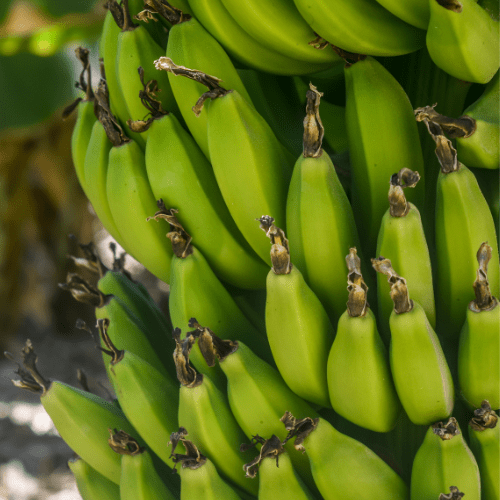
Depending on the growing conditions, the plants will take between 9 and 15 months from planting to produce fruit.
The fruit is harvested when the bananas are still green but mature. They will ripen off the plant, or you can leave them on the tree longer for a sweeter taste.