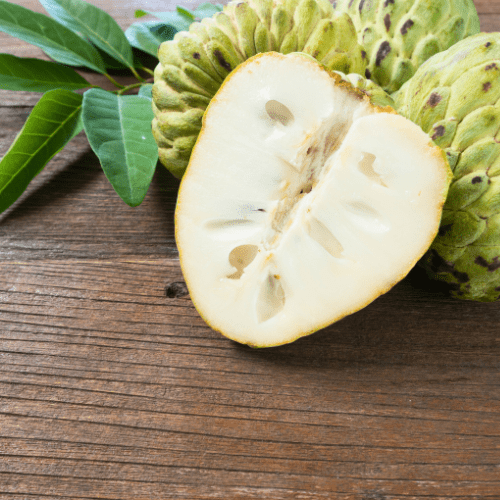
Position
Plant in a full sun position for best growth, flowering, and fruit production. In very hot climates, young trees may benefit from light afternoon shade until established. Protect from strong winds, which can damage branches and reduce fruit set.
Size
- Height: 8–15 m
- Width: 6–10 m
- It can be kept small with regular pruning.
Soil
Prefers deep, fertile, well-drained soils rich in organic matter. Performs best in slightly acidic soils with a pH of 5.5–6.5. Avoid heavy clay soils that remain waterlogged. Adding a bag of acid compost, half a bag of
Volcanic Rock Dust and a bag of
Superfrass will help promote rapid growth. Theses two products also protect the roots from being eaten by insects.
Watering
Requires regular watering, especially during establishment, flowering, and fruit development. Keep the soil consistently moist but not saturated. Mature trees are moderately drought-tolerant but produce better crops with reliable moisture.
Mulch
Add a thick layer of Pine Bark Mulch, keeping it about 20 to 30 centimetres away from the tree trunk (any closer may cause excess moisture and damage the trunk). Pine Bark mulch helps retain moisture in the soil and prevents weeds.
Fertilising
Apply 3 teaspoons every 4 months of our slow-release all-plant fertiliser. The roots will absorb what they need.
Pruning
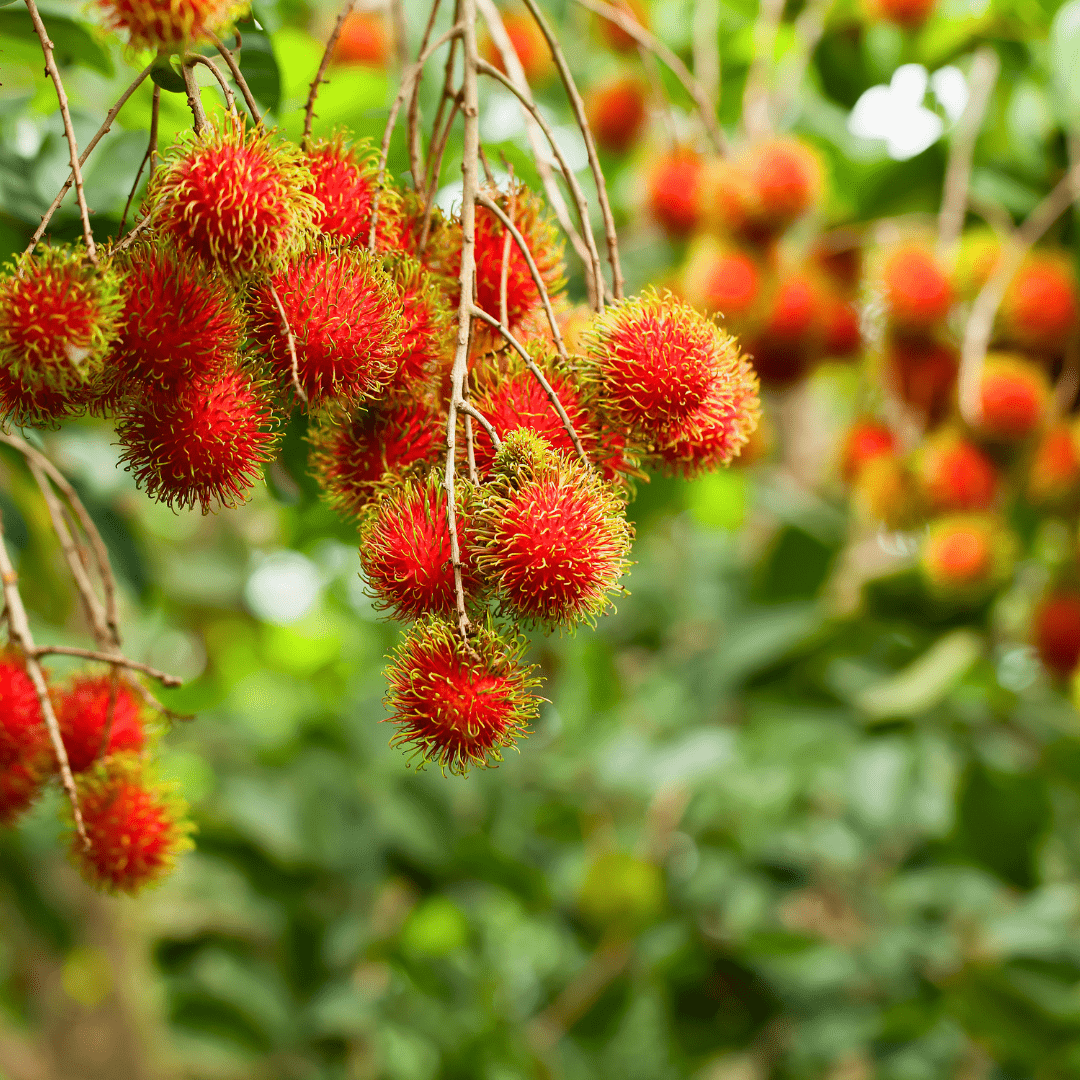
The best time to prune a Rambutan tree is immediately after harvesting, once the tree has finished fruiting. This allows the tree to recover and produce strong new shoots for the next flowering season.
For South African subtropical conditions, this is usually late summer to early autumn after the main crop. Avoid heavy pruning during winter or just before flowering, as this can reduce the next season’s fruit set. Remove dead or diseased branches, crossing branches, and weak upright shoots (“water sprouts”).
Lightly thin the canopy to improve airflow, sunlight penetration, and fruit quality. Reduce excessive height to make harvesting easier.
Heavy pruning can delay flowering and fruit production for a season.
Harvesting
Allow the fruit to remain on the tree until it is fully coloured and beautifully sweet for the best flavour and quality. Harvest whole fruit clusters using pruning shears or a long-handled pruning pole. Avoid pulling individual fruits, as damaged skins spoil more quickly.
Pick during the cool early morning or late afternoon to help keep the fruit fresh and prevent moisture loss.
Protect ripening fruit by covering trees with netting a few weeks before harvest to reduce damage from birds, bats, and squirrels.
Pests & Diseases
Susceptible to many pests and diseases. Best to keep a watch and preferably use preventative measures by spraying with agricultural Neem Oil or Effective Microorganisms (EM Control)