
Position
Plant your pomegranate in full sun for maximum flower and fruit production. They do not like wind, so plant them in a protected spot.
Size
Pomegranates typically grow between 3 and 6 mts in height and have a wide canopy spread.
Soil Type
These trees are not fussy about the soil type they grow in. Add a layer of organic mulch to get great nutrients into the soil.
Improve soil quality by adding a bag of Volcanic Rock Dust (R25 per bag), which replaces minerals and trace elements that our soils have lost. Also add a bag of Superfrass (R25 per bag) at planting to boost nutrients (NPK and micronutrients) and support strong, healthy growth while also helping protect against pests.
Watering
Once established, it can tolerate drought and heat very well. Even without water, the tree will grow, but it won’t produce good-quality fruit in any significant quantity. Water it about twice a month if it hasn’t rained. Keeping the soil moist during fruiting will prevent the fruits from splitting.
Mulching
Apply 2 to 5 centimetres of pine bark mulch to protect the roots from UV damage and drying out. It retains moisture and maintains an optimal pH. Do not let the mulch touch the plant stem, as it may cause infection or rot.
Fertilising
Fertilise your plant from April to July. Nitrogen is essential for pomegranate trees that are not bearing fruit. Well-aged horse manure works wonders.
Use our slow-release nitrogen-rich all plant fertiliser. Apply 1 teaspoon every 4-5 months. The roots will absorb what they require.
Pruning
Pomegranates do best when they are pruned lightly after about two years.
Pest and Disease Control
Monitor for common pests like aphids, scales, and fruit borers. We recommend Effective Microorganisms to prevent the spread of these pests and diseases. Hose the tree first to remove the aphids, and then spray well with EM Control. As the tree grows larger, it will be healthy, and pests will be a thing of the past. Use it preventively once a month.
Harvesting
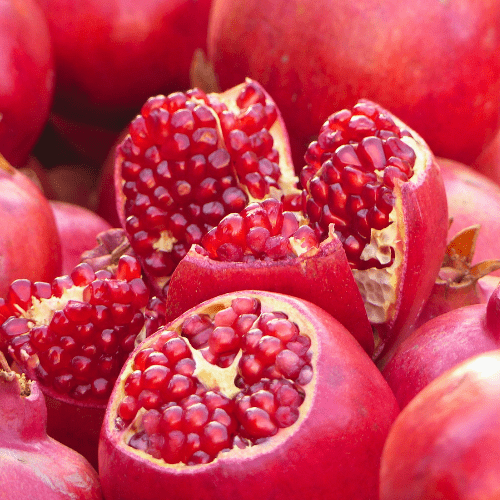
Pomegranate fruit takes a long time to ripen (about 5 to 7 months), and most will ripen from about April. During hot, dry conditions, pomegranates can ripen earlier and faster, so pick the fruit just before it is fully mature, as it cracks if allowed to become overripe.
They are ready to be picked if they have good colour. When tapped, they sound metallic.
Use scissors to cut the fruit off rather than tugging, which can tear the branches.