Position
Pink Bananas will do well in full sun or partial shade. Ensure that the soil is well-drained and rich with organic matter like compost.
Size
A mature pink banana tree can average height of 2m and a spread of 1.5m`
Soil
Your tree needs well-draining, slightly acidic soil with a pH range of between 5.5 and 6.5. Add a couple of bags of acid compost in your soil to achieve the correct pH
Improve Soil Quality at Planting
Give your plants the best possible start by adding a bag of Volcanic Rock Dust (R25 per bag) to the soil. Volcanic Rock Dust helps replenish essential minerals and trace elements that have been depleted from our soils over time.
We also recommend adding a bag of Superfrass (R25 per bag) when planting. Superfrass provides a natural source of NPK and micronutrients to encourage strong, healthy growth, while also helping to improve the plant’s natural resistance to pests.
Together, these products help create a nutrient-rich growing environment and give your plants the foundation they need to establish and thrive.
Watering
Water the plant weekly, often during hot summer. Well-established plants can handle the drought but will not look their best without adequate water.
Mulching
Add a thick layer of pine bark mulch, keeping it about 20 to 30 centimetres away from the tree trunk (any closer may cause excess moisture and damage the trunk). This will retain the moisture in the soil and will prevent weeds from taking over.
Fertilising
Banana Trees require heavy fertilising during their growth. Use our slow-release nitrogen-rich all plant fertiliser Apply 1 teaspoon every 4-5 months
Pruning
Pruning is recommended to maintain the tree’s shape, remove dead wood, and leaves and encourage healthy growth.
Pests and Diseases
Spraying regularly with Agricultural Neem Oil or Effective Microorganisms (EM Control ) will assist in either prevention or after the fact.
Practice good garden hygiene (remove fallen fruit and leaves).
Harvesting
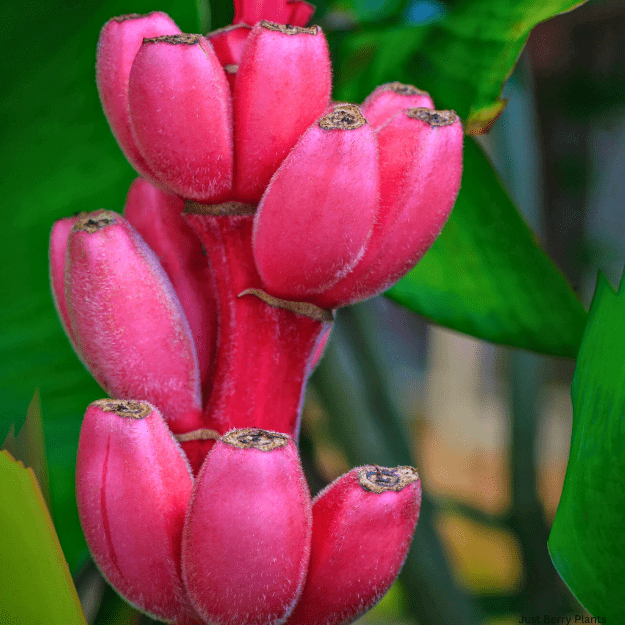
From the time the flowers appear to when the fruit is mature is usually 75 to 80 days. When ripe, these bananas will have a deep red to maroon rind with a slightly soft touch. Remember that bananas can be used at various stages – even green bananas.