Position
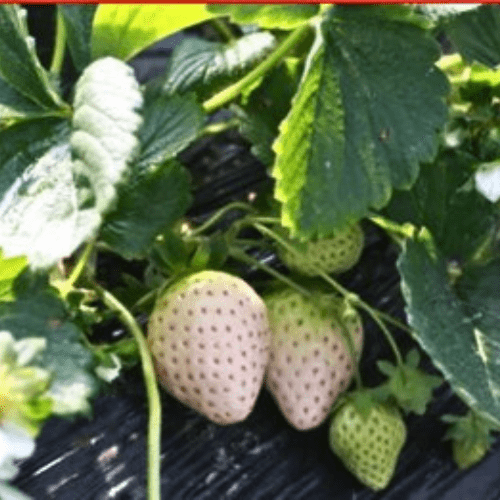
Pineberries are compact plants and grow well in garden beds, raised beds and containers. For good flowering and fruiting, choose a position with plenty of sunlight. In very hot climates, some shade or protection from intense afternoon sun can be beneficial.
When planting, make sure the roots are covered but that the crown remains level with the soil surface. Avoid covering the crown with soil, as this can lead to rot.
Size
A mature Pineberry plant generally reaches 20–30 cm in height and 25–45 cm in width. Allow approximately 30–40 cm between plants for healthy growth and sufficient airflow.
Pineberries also produce runners, just like other strawberry plants. These runners can take root and form new plants.
Soil type
The ideal soil is fertile, well-drained sandy or loamy soil that holds enough moisture without becoming waterlogged. Pineberries prefer slightly acidic conditions, with a pH of approximately 5.5–6.5.
Improve heavy or clay-rich soils before planting to increase drainage and organic matter. Adding acid compost or
Berry Mix can also help improve the soil and maintain the slightly acidic conditions these plants prefer.
Superfrass (R25 per bag) is a natural, high-quality organic growth enhancer and pesticide, and
Volcanic Rock Dust (R25 per bag), which contains more than 72 trace elements and minerals, can be added at planting.
Mulching
Mulch is a good way of preventing weeds and reducing the rate of water evaporation from the soil.
Apply organic mulch to your tree all year round.
Apply a thin layer of pine bark mulch to protect the roots from UV damage and drying out. It helps retain moisture, and maintains an optimal pH. Do not let the mulch touch the plant stem, as it may cause infection or rot.
Watering
Give your plants 2.5 to 3 cms weekly to moisten the soil. Adjust this amount if there has been rain. Keep consistently moist but not soggy.
Fertilising
Use our slow-release nitrogen-rich all plant fertiliser. Apply 1 teaspoon every 4-5 months.
Pests and Diseases
Aphids, citrus psylla, red scale, citrus greening. Spraying regularly with Agricultural Neem Oil or Effective Microorganisms (EM Control ) will assist in either prevention or after the fact. If you already have aphids or mites, wash the tree with a harsh hosing, and when dry, spray with Neem oil or EM Control.
Practice good garden hygiene (remove fallen fruit and leaves).
Watch for root rot (if overwatered) and fungal infections during wet periods.
Harvesting
These scrumptious berries are ready to be picked and enjoyed in spring and summer. Simply pluck them and enjoy.