
Position
Full sun is ideal, although they can tolerate some shade. However, they will yield more fruit and grow more vigorously with increased sun exposure. They are really easy to grow. Plant at least 4m apart.
Size
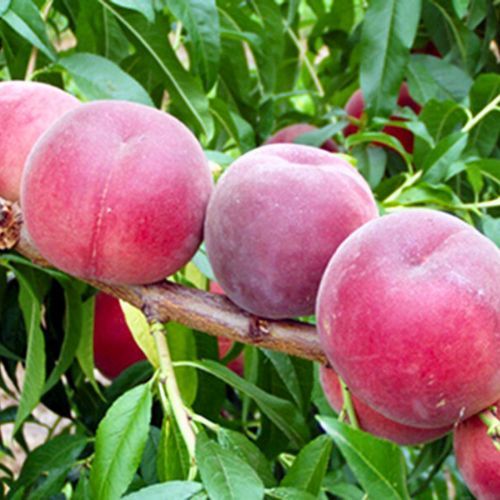
Springcrest is a small tree reaching 4m. Plan the site before planting, keeping the tree a safe distance away from external walls, electrical lines, and other trees. Plant in a protected area if possible, as strong winds can damage branches and leaves.
Soil Type
Peach trees are not fussy about soil type, although they prefer slightly acidic soil. Loosen the soil in the area before planting, to a depth of about 1.5 meters in your normal garden soil, and ensure good drainage is present.
Watering
Water every second day after transplanting for about a week. Thereafter, reduce watering to twice a week in dry or hot weather for the next 2 to 3 months.
Water every couple of weeks if there is no rain. Too much water can cause root rot, but do not allow the roots to dry out completely.
Mulching
Add a thick layer of pine bark mulch, keeping it about 20 to 30 centimetres away from the tree trunk (any closer may cause excess moisture and damage the trunk). This will retain the moisture in the soil and will prevent weeds from taking over.
Fertilising
Apply one teaspoon of our slow-release nitrogen-rich berry fertiliser every 4-5 months.
Pruning
Prune the top and sides of your peach tree regularly in Spring and early Autumn to prevent it from growing too large, which will also allow light into the centre of the tree. It will be easier to harvest the fruit.
Obliterate dead or diseased branches whenever they appear and dispose of them promptly.
Pests and Diseases
Aphids, citrus psylla, red scale, citrus greening. Spraying regularly with Agricultural Neem Oil or Effective Microorganisms (EM Control) will assist in either prevention or after the fact. If you already have aphids or mites, wash the tree with a harsh hosing, and when dry, spray with Neem oil or EM Control.
Practice good garden hygiene (remove fallen fruit and leaves).
Watch for root rot (caused by overwatering) and fungal infections during wet periods.