Position
Full sunlight helps to prevent the tree from contracting diseases. The sunshine also helps to produce sweet, delicious fruits, however, they require colder climates and do not do well in warm winter climates.
Plant the tree about six mts from another tree, wall, electric wires, etc., to allow it to grow without being hindered. Use companion plants like legumes because these attract suitable pollinators and help to keep the soil fertile.
Size
This tree reaches a mature height between 2 and 5 mts with a canopy of 2.5 to 3.5 mts.
Soil Type
Soils that are well-draining but still manage to retain some moisture are best for nectarine trees. The only soils that do not work well are dense or heavy. A slightly acidic pH between 6.0 and 7.0 is best for fruit trees.
Watering
Water your nectarine tree once every 10 to 14 days to soak the ground around it. Be careful not to overwater it, though. Even if the grass around it is brown and dry, the nectarine tree can thrive on this amount of watering.
Mulch
Add a thick layer of pine bark mulch, keeping it about 20 to 30 centimetres away from the tree trunk (any closer may cause excess moisture and damage the trunk). This will retain the moisture in the soil and will prevent weeds from taking over.
Fertilising
Well-rotted organic material and a balanced fertiliser should be applied liberally around your tree in the spring.
Use our slow-release nitrogen-rich all plant fertiliser. Apply 1 teaspoon every 4-5 months. The roots will absorb what they required.
Pruning
Although most fruit trees should be pruned in the dormant winter months, nectarine trees should be pruned late in early spring to allow buds and flowers to survive.
Pests and Diseases
Aphids, citrus psylla, red scale, citrus greening. Spraying regularly with Agricultural Neem Oil or Effective Microorganisms (EM Control ) will assist in either prevention or after the fact. If you already have aphids or mites, wash the tree with a harsh hosing, and when dry, spray with Neem oil or EM Control.
Practice good garden hygiene (remove fallen fruit and leaves).
Watch for root rot (if overwatered) and fungal infections during wet periods.
Harvesting
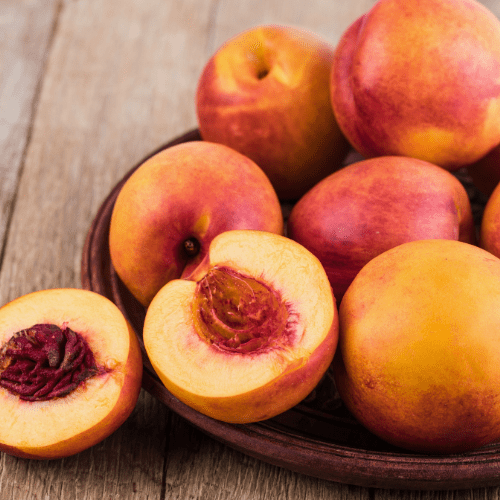
Pick your delicious, sweet fruit when the skin is orange-red.