Position:
Plant your olive tree in an area with full sun (at least 6 hours per day). Olive trees can tolerate wind.
Size:
If uncontrolled, olive trees can grow up to 10 meters tall.
Soil Type:
Manzanilla olive trees are not particularly fussy about soil mix, but a pH between 5 and 7 is ideal. Good drainage and aeration are absolutely essential for maximum growth and harvest. Olive trees will not tolerate waterlogged soil. Slightly stony ground is acceptable.
They also require a bit of cool time. An average winter temperature that is below 21° Celsius for about 2 months is ideal.
Improve Soil Quality at Planting
Give your plants the best possible start by adding a bag of Volcanic Rock Dust (R25 per bag) to the soil. Volcanic Rock Dust helps replenish essential minerals and trace elements that have been depleted from our soils over time.
We also recommend adding a bag of Superfrass (R25 per bag) when planting. Superfrass provides a natural source of NPK and micronutrients to encourage strong, healthy growth, while also helping to improve the plant’s natural resistance to pests.
Together, these products help create a nutrient-rich growing environment and give your plants the foundation they need to establish and thrive.
Adding a bag of Volcanic Rock Dust every 4 months will increase the calcium and magnesium so needed for olive trees.
Watering:
New plants require regular watering. Once mature and established, they are drought-tolerant and will only need to be watered once a month if it does not rain. If olive trees are planted in big pots, they require more watering.
Mulching:
All fruit trees thrive if they are protected with good-quality mulch. Generous layers of pine bark mulch and green pine needles spread around the trunk of the tree help eradicate weeds, slightly lower the pH, and protect the roots from harsh UV rays. Mulch also helps to keep the roots damp. Be careful not to apply mulch too close to the tree trunk, as the water it retains can cause the trunk to rot.
Fertilising:
A potted olive tree must be fertilised in spring and again in mid-summer. Never over-fertilise as this will encourage leaf growth but little fruit. Our all plant slow-release fertiliser is ideal 18.9.10 + 2mgO+Trace Elements) A complete balanced fertiliser. Apply 1 tspn every 4-5 months.
Pruning:
It is always good to cut away diseased or dry branches in winter to allow for maximum light and sun penetration in summer.
Pests and Diseases:
Harvesting:
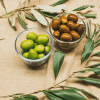
Fruits are harvested when all the olives are ripe. All olives start out green, then gradually ripen to a pinkish colour and then to dark purple. The time you harvest them depends on how the olives will be used.
Olives must either be put in brine or pressed to make oil within 3 days of harvesting. Otherwise, they turn sour. The oil content of olives reduces as the fruits ripen. To make Greek-style olives, pick mature purple fruits. Once in brine, they turn black.