Position
Choose a sunny location with full sun exposure—fig trees need at least 6 to 8 hours of direct sunlight daily.
Space trees 3 to 5 metres apart to accommodate mature size and ensure good air circulation.
Plant at the same depth as in the nursery container. In colder regions, protect the base with mulch and cover the tree with frost cloth when necessary. For potted figs, move them indoors to a cool, sunny spot during cold spells.
Soil
Figs thrive in well-draining soil—loamy or sandy loam is ideal. They do not tolerate waterlogged conditions.
Incorporate compost or other organic matter to improve drainage and support strong root development.
Add organic matter such as compost to improve soil drainage and ensure good soil structure for root development.
Give your plants the best possible start by adding a bag of Volcanic Rock Dust (R25 per bag) to the soil. Volcanic Rock Dust helps replenish essential minerals and trace elements that have been depleted from our soils over time.
We also recommend adding a bag of Superfrass (R25 per bag) when planting. Superfrass provides a natural source of NPK and micronutrients to encourage strong, healthy growth, while also helping to improve the plant’s natural resistance to pests.
Together, these products help create a nutrient-rich growing environment and give your plants the foundation they need to establish and thrive.
Watering
Keep the soil consistently moist after planting, but avoid overwatering. Water deeply once a week, letting the top few centimetres of soil dry out between waterings.
Once established, water only when the top 2–5 cm of soil feels dry. Reduce watering during cooler months. Avoid excessive moisture, which can cause root rot.
Mulching
Apply a 2–5 cm layer of pine bark mulch to retain soil moisture, protect roots from heat, and help maintain pH levels.
Keep mulch away from the trunk to prevent rot and infection.
Fertilising
Use a slow-release, all plant fertiliser—apply 1 teaspoon every 4–5 months. The plant will absorb nutrients as needed.
Pruning
Prune to control size, shape, and overall health. Remove dead or diseased branches and any that grow inward toward the centre.
Best done in late winter or early spring before new growth appears. Light summer pruning can help improve fruit quality and manage shape.
Pests & Diseases
Use Agricultural Neem Oil or Effective Microorganisms (EM Control ) for prevention and treatment. If aphids or mites are present, spray the tree with a strong stream of water, let it dry, then apply Neem or EM Control.
Harvesting
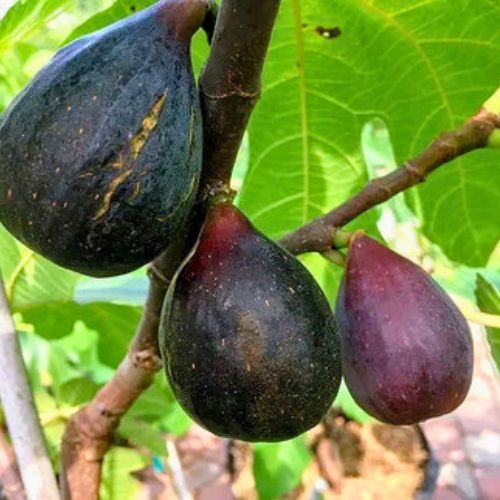
Figs are ripe when soft, fragrant, and slightly drooping. Harvest gently by twisting or cutting them from the tree—handle with care, as they bruise easily.
Figs typically ripen from late summer to early autumn.