



Position
Plant a Litchi tree in full sun for best results. If you plant a litchi tree in a container in an area with sunlight on only one side, turn the tree as often as possible to ensure even growth. Plant at least three mts away from other trees, buildings, and power lines. Litchi trees are huge and proliferate.
Potted litchi trees grow very well in containers, providing an adequately sized pot for root development—at least a 1m pot with enough drainage holes is essential. Glazed pots require far less watering than raw terracotta pots due to their porous nature.
Soil Type
Litchis thrive in deep, fertile, well-draining soil. Use an acidic soil with a pH of 5.0 to 5.5. A higher pH level is acceptable, but the tree will not grow as well.
The soil needs to drain well, as litchi trees’ roots do not tolerate wet conditions and will rot if allowed to sit in water for extended periods. A mixture of soil, sand, and perlite is highly recommended for proper drainage.
Mulching
Add a thick layer of pine bark mulch, keeping it about 20 to 30 centimetres away from the tree trunk (any closer may cause excess moisture and damage the trunk). This will retain the moisture in the soil and will prevent weeds from taking over.
Fertilising
Apply 1 teaspoon of our slow-release nitrogen-rich berry fertiliser every 4-5 months.
Pests and Diseases
Aphids, citrus psylla, red scale, citrus greening. Spraying regularly with Agricultural Neem Oil or Effective Microorganisms (EM Control ) will assist in either prevention or after the fact. If you already have aphids or mites, wash the tree with a harsh hosing, and when dry, spray with Neem oil or EM Control.
Practice good garden hygiene (remove fallen fruit and leaves).
Watch for root rot (caused by overwatering) and fungal infections during wet periods.
Harvesting
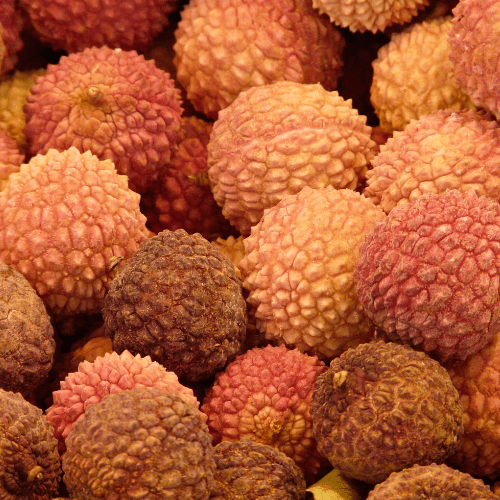
Litchi fruits grow in bunches and should be picked only when the skin is a pink colour.