Position:
Calamondin Orange thrives in a warm, sunny position and performs best with at least 6 to 8 hours of direct sunlight daily. It tolerates heat and humidity well and is more cold-tolerant than many other citrus varieties. It tolerates heat and humidity well and is more cold-tolerant than many other citrus varieties; however, protect young trees from severe frost.
Plant dwarf trees approximately 2 metres apart to allow sufficient room for the canopy to develop and to maintain good air circulation.
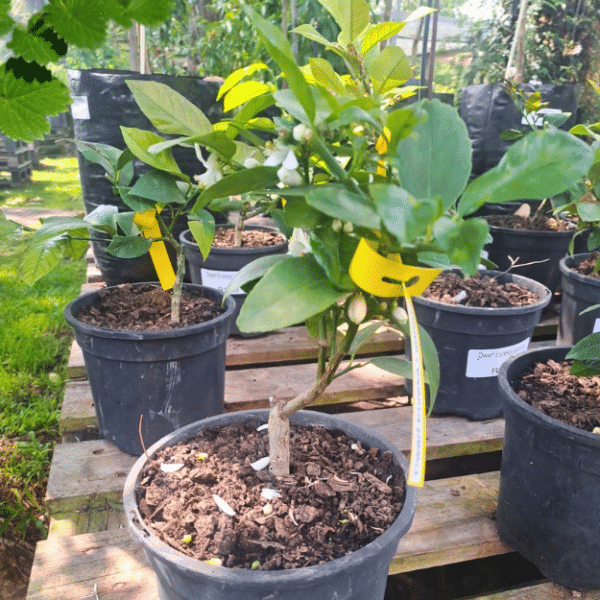
Calamondin also grows exceptionally well in a large container. For long-term growing, use a container of approximately 100 litres (at least, 50cmx50cmx50cm) with adequate drainage holes.
Soil Type:
Calamondin grows best in fertile, well-drained, slightly acidic soil, ideally with a pH of approximately 5.5 to 6.5. Add acid compost to help create the slightly acidic conditions citrus prefers.
If your garden soil drains poorly, improve the drainage before planting or plant the tree on a slightly raised mound to prevent water from collecting around the roots.
Organic matter or compost can be incorporated into poor soil to improve its structure. Improve soil quality by adding half a bag of
Volcanic Rock Dust (R25 per bag) for minerals and trace elements, and a bag of
Superfrass (R25 per bag) at planting to boost nutrients (NPK and micronutrients) and support strong, healthy growth while also helping protect against pests.
For container growing, use a high-quality, free-draining potting mixture with acid compost, and ensure the container has excellent drainage.
Size:
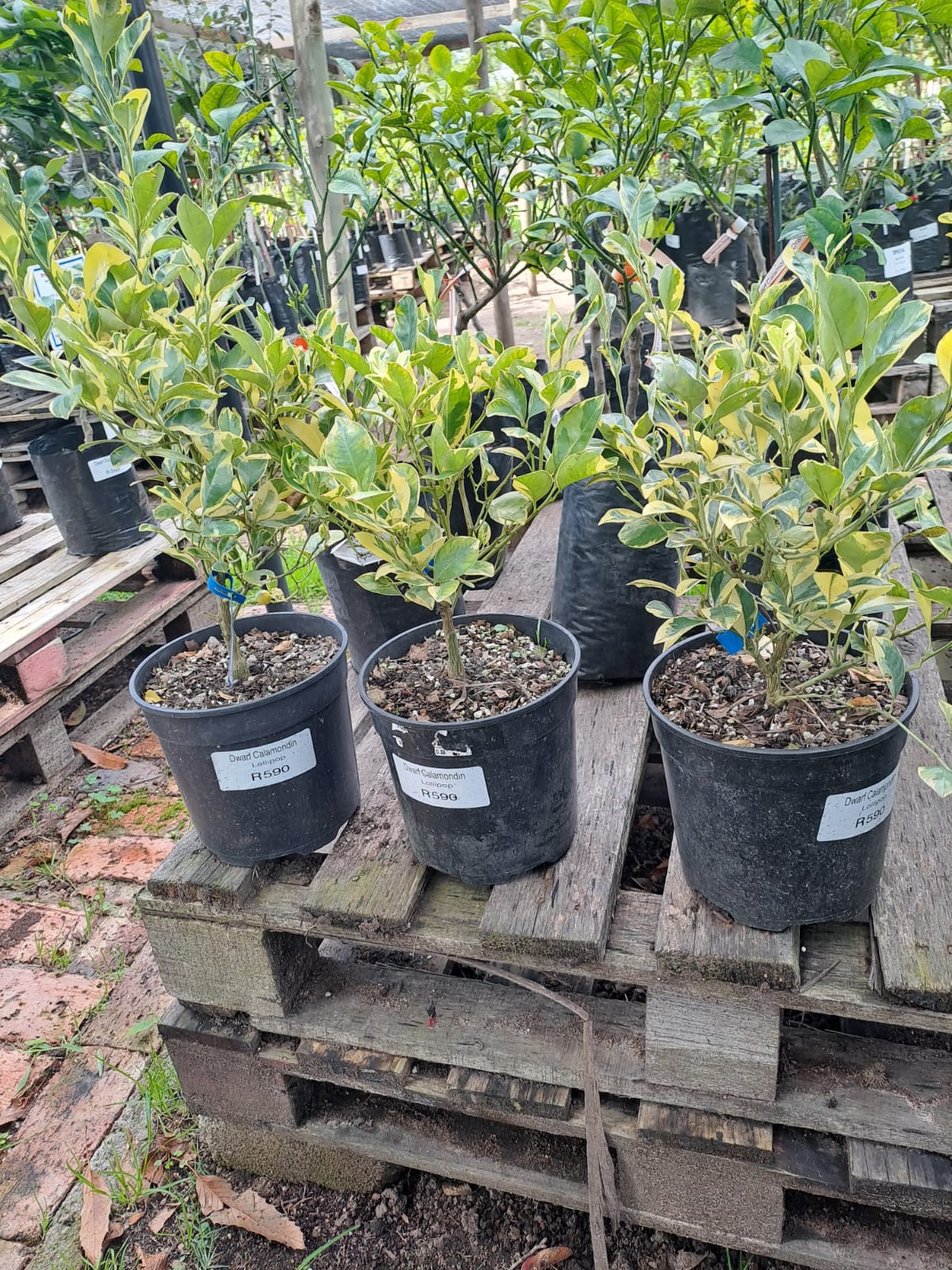
Dwarf Calamondin Orange typically grows to about 1.5 m-2 metres tall, depending on the rootstock, growing conditions and pruning.
Its naturally compact growth makes it an excellent citrus tree for small gardens, patios and containers, and it can also be pruned and shaped into an attractive hedge.
Mulching:
Add a thick layer of pine bark mulch, around the tree to help retain soil moisture, regulate soil temperature and suppress weeds.
Keep the mulch away from the trunk rather than piling it against the bark, as constant moisture around the trunk can encourage rot and disease.
Watering:
Calamondin requires regular watering, particularly while establishing and when flowering and developing fruit. Water deeply and then allow the upper layer of soil to begin drying slightly before watering again.
Increase watering during hot, dry spring and summer weather, particularly for container-grown trees, as containers can dry out considerably faster than garden soil.
Avoid allowing the tree to remain waterlogged, as constantly wet soil can lead to root problems.
Fertilising:
If the leaves start to yellow, your plant may not have enough magnesium. Apply a little Epsom salt to the tree’s dripline (where the leaves extend their reach). Apply slow-release citrus fertiliser during the harvest season and repeat after the fruiting period. Utilising our slow-release fertiliser is a must for citrus; even though it is called berry fertiliser it is for all plants/trees.
Yellowing leaves can indicate a nutrient deficiency, but the cause is not always a lack of magnesium. Before applying Epsom salts, check the pattern of yellowing and consider other possible causes, including iron or nitrogen deficiency, incorrect soil pH, poor drainage or overwatering.
Pruning:
Calamondin requires relatively little pruning but responds well to shaping. Prune to maintain the desired height and spread, particularly when growing the tree in a container or as a hedge.
Remove dead, damaged, diseased, crossing or overcrowded branches and any shoots that develop below the graft union.
Avoid excessive pruning, as removing too much healthy foliage can reduce flowering and fruit production.
Pests and Disease:
Watch for common citrus pests such as aphids, scale insects, citrus psylla, mites and mealybugs. Regular inspection is particularly important on young trees and tender new growth.
We recommend Effective Microorganisms to prevent the spread of these pests and diseases. Hose the tree first, to remove the aphids, and then spray well with EM Control. As the tree grows larger it will be healthy and pests will be a thing of the past. Continue spraying regularly as a preventative measure.