
Growing Information for Cranberry Plants
Step-by-step picture video on how to plant:
Position
Plant cranberries in full sun to semi-shade. In very hot climates, some protection from the intense afternoon sun is beneficial, and dappled afternoon shade works well.
Cranberries can be grown in a container or directly in the garden, provided they receive regular watering and are planted in the correct acidic growing medium.
When planting in the ground, dig a hole approximately 50 × 50 × 50 cm and prepare it with the correct acidic soil mixture.
Size
Cranberries are low-growing, spreading plants rather than upright shrubs. They generally grow to approximately 30 cm high, producing trailing runners that can spread 1 metre or more if left unrestricted.
They make an attractive groundcover when grown in suitable acidic conditions.
Soil Type
Cranberries require very acidic, moisture-retentive but well-draining soil, ideally with a pH of approximately 4.0–5.5.
Our farmer has spent years researching and trialing soil mixtures to achieve healthy plants and good harvests.
Lithuanian or Canadian Sphagnum Peat Moss is an important component of the growing medium, together with acid compost.
Before planting, thoroughly soak the peat moss. Dry peat moss can initially be difficult to wet and may draw moisture away from the plant’s root zone. Soaking it 12- 24 hours before use ensures it is evenly hydrated.
For plants grown in containers, combine the acid compost and soaked peat moss with a suitable potting soil. For plants grown in the ground, incorporate them thoroughly into the existing soil.
Add soaked peat moss https://www.justberryplants.co.za/product/berry-mix/ Berry Mix and https://www.justberryplants.co.za/product/volcanic-rock-dust-1-bag-for-one-plant/ Volcanic Rock Dust, and mix well into the upper planting area.
Gently remove the cranberry plant from its container, taking care not to disturb the roots unnecessarily. Plant it at approximately the same depth at which it was growing in its nursery container.
Finish with a layer of pine bark mulch, keeping the mulch away from the crown and stems of the plant.
Watering
Cranberries need consistently moist soil, particularly during warm weather and while the plant is establishing.
Do not allow the root zone to dry out completely. However, although cranberries enjoy moist conditions, container-grown plants should not be left permanently waterlogged.
Regular, deep watering is preferable to allowing the soil to alternate between very wet and very dry.
Mulching
Mulching helps suppress weeds, reduces water evaporation, and helps keep the shallow root system cool and moist.
Apply approximately 2-3 cm of pine bark mulch around the plant.
Pine bark is particularly suitable for acid-loving plants because it helps retain soil moisture and contributes to maintaining suitable acidic growing conditions as it breaks down.
Keep the mulch slightly away from the crown and stems to reduce the risk of rot and fungal problems.
Fertilising
Apply 1 teaspoon of our slow-release Berry Fertiliser every 4–5 months.
Avoid over-fertilising cranberries. They naturally grow in relatively nutrient-poor soils and excessive fertiliser, particularly nitrogen, can encourage vigorous leafy growth at the expense of fruit production.
Pruning
Cranberries require very little pruning during their first few years.
Once the plants are established, remove dead, damaged or weak growth as necessary. Older plants can be lightly thinned to prevent the runners from becoming excessively dense and tangled.
Avoid heavy pruning, as fruit is produced on short upright shoots growing from the spreading runners.
Harvesting
Cranberries generally ripen from late summer into autumn, depending on the climate and growing conditions.
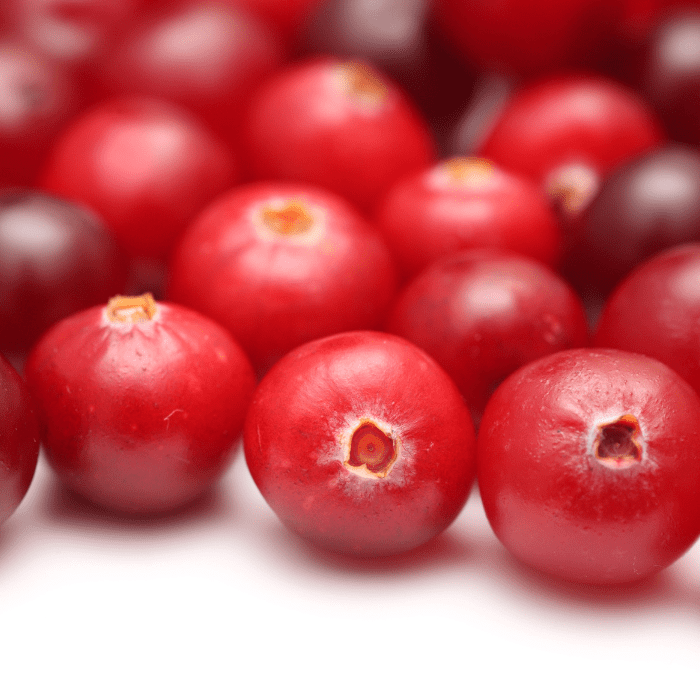
The berries are ready to harvest when they have developed their characteristic deep red colour and feel firm.
For home-grown plants, you can pick the berries by hand as they ripen. You don’t need to flood the plants—the familiar flooded cranberry fields are primarily a commercial harvesting technique.
Fresh cranberries can be refrigerated after harvesting or frozen for longer-term storage.
Pests & Diseases
Cranberries are generally hardy when grown in the correct conditions, but plants should be checked regularly for aphids, mites, and other sap-sucking insects.
Spraying with Agricultural Neem Oil or EM Control can assist with pest management. If aphids or mites are present, first wash them from the plant with a firm spray of water. Once the foliage has dried, apply Neem Oil or EM Control according to the product directions.
Practice good garden hygiene by removing fallen fruit, dead leaves and diseased plant material.
Watch for root and crown rot, particularly where drainage is poor, as well as fungal diseases during prolonged wet or humid periods.
Good air circulation, correct watering and well-draining acidic soil will help keep cranberry plants healthy.
One important correction is the size. Cranberries (Vaccinium macrocarpon) are normally very low-growing plants; 40 cm high with 2 m vines would be unusually large as a standard description. The runners spread horizontally, while the fruit-bearing uprights remain quite short.