
Growing Information for Cranberry Plants
Step-by-step picture video on how to plant:
Position
Full sun or semi-shade if you live in a very hot climate. Dappled sun in the afternoon works well.
Grow them in a container or in the garden where they can get regular watering
Dig a hole 50x50x50cm. Place the plant directly into the correct soil mix and cover it with a mulch of pine bark or green pine needles, 5 – 15cm thick.
Our farmer has spent years of research and trials perfecting the soil mixture for maximum harvest.
Lithuanian or Canadian Spaghnum Peat Moss is a must, and acid compost is the base soil.
The Peat Moss must be soaked in water for at least 24 hours before planting, as it initially absorbs a lot of water, and your plant’s roots will not receive water.
Place acid compost in the pot/hole, and mix it with potting soil if in a container, or with any other soil if in the ground.
Add soaked peat moss, berry mix, and volcanic rock dust, mixing into the top section
Gently place the plant (try not to disturb the roots) in the soil mixture and cover the roots (not the stem) with Pine Bark Mulch.
Size
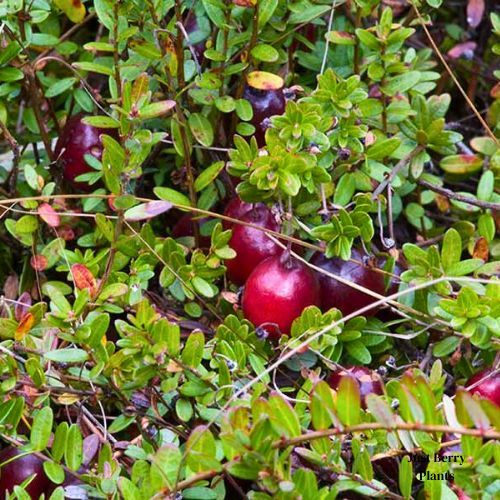
40cm High with vines of 2m in length. Cranberries grow as a flat-spreading plant. If planting in a container, ensure the cranberry has room to spread.
Watering
Keep damp but not waterlogged
Mulching
Apply organic mulch to your tree year-round.
Use from 2 to 5 centimetres of pine bark mulch to protect the roots from UV damage and drying out. It retains moisture and maintains an optimal pH. Do not let the mulch touch the plant stem, as it may cause infection or rot.
Fertilising
Apply 1 teaspoon of our slow-release high-nitrogen all-plant fertiliser every 4-5 months. The roots will absorb what they need.
Pruning
Cut back dead vines after 3 years.
Pests and Diseases
Aphids, citrus psylla, red scale, citrus greening. Spraying regularly with Agricultural Neem Oil or Effective Microorganisms (EM Control) will assist with prevention or with after-the-fact control. If you already have aphids or mites, wash the tree with a harsh hosing, and when dry, spray with Neem oil or EM Control.
Practice good garden hygiene (remove fallen fruit and leaves).
Watch for root rot (if overwatered) and fungal infections during wet periods.