Position
Plant in full sun if possible. Space trees about 3-5m apart to allow for their mature size and proper air circulation.
Soil
Well-draining soil is crucial. Sandy loam or loamy soil is ideal. Incorporate organic matter like compost to improve soil structure and fertility. Plant the tree at the same depth it is in the nursery bag.
Watering
Keep the soil consistently moist but not waterlogged. Water deeply to encourage deep root growth.
Mulching
Use 2 to 5 centimetres of pine bark mulch to protect the roots from UV damage and drying out. The mulch retains moisture and maintains an optimal pH. Do not let the mulch touch the plant stem, as it may cause infection or rot.
Fertilising
Apply our slow-release (berry fertiliser) all-plant fertiliser. Apply one teaspoon every 4-5 months. The roots will absorb what they need.
Alternatively, apply a balanced fertiliser (10-10-10) before new growth begins in early spring. Thereafter fertilise annually in early spring.
Pruning
Prune to shape the tree, remove dead or diseased wood, and improve air circulation. Prune in late winter or early spring before new growth starts.
Pest and Disease Management
Nectarines can be susceptible to diseases such as peach leaf curl and brown rot. Use organic products to control as needed and practice good garden hygiene by removing fallen fruit from the soil beneath the tree.
Agricultural Neem Oil or Effective Microorganisms (EM Control ) will assist in either prevention or after the fact. If you already have aphids or mites, wash the tree with a harsh hosing, and when dry, spray with Neem oil or EM Control. Nectarine trees need regular spraying before the onset of fruit and immediately after buds turn to small fruit. Continue organic spraying regularly for good-quality peaches.
Thinning Fruit
Thin fruit in early summer when they are about the size of a small coin to promote larger, healthier fruit and prevent branch breakage due to excessive weight.
Harvesting
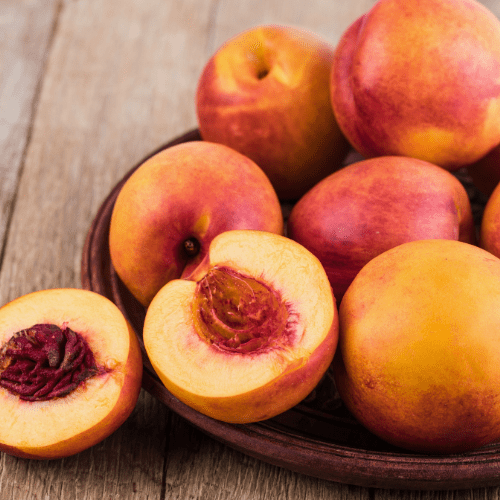
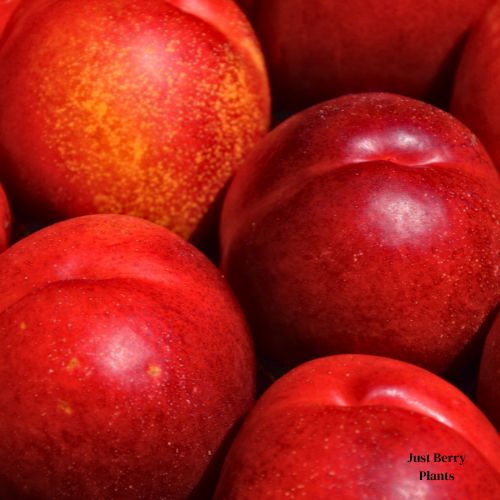
August Red nectarines are usually ready to harvest in mid to late summer. Pick the fruit when it’s firm and slightly soft to the touch, with a vibrant red color. They should come off the tree easily when gently twisted.