Position
Grow in full sun to partial shade. In hotter climates, light afternoon shade is beneficial, especially for young trees. Protect from strong winds.
Grow in full sun to partial shade. In hotter climates, light afternoon shade is beneficial, especially for young trees. Protect from strong winds.
Size
The Rainforest Plum – grows 3–6 m high and 2–4 m wide, forming a dense, rounded evergreen tree. It can be kept smaller with regular pruning and is best managed with good drainage and regular pruning.
The Rainforest Plum – grows 3–6 m high and 2–4 m wide, forming a dense, rounded evergreen tree. It can be kept smaller with regular pruning and is best managed with good drainage and regular pruning.
Soil Type
Prefers fertile, well-drained soil rich in organic matter. This supports the slightly acidic range of 5.5–6.8, though it tolerates up to about 7.0 if drainage is good.
Prefers fertile, well-drained soil rich in organic matter. This supports the slightly acidic range of 5.5–6.8, though it tolerates up to about 7.0 if drainage is good.
Adding half a bag of our Volcanic Rock Dust (R25 per bag) and a bag of Superfrass (R25 per bag) at planting time helps replenish essential minerals and nutrients in the soil, encourages vigorous growth, and provides natural protection against root-feeding insects.
Watering
Water regularly while establishing. Mature trees prefer consistently moist soil but are moderately drought-tolerant once established. Avoid prolonged waterlogging.
Water regularly while establishing. Mature trees prefer consistently moist soil but are moderately drought-tolerant once established. Avoid prolonged waterlogging.
Mulch
Apply a 5–10 cm layer of Pine Bark Mulch around the base to conserve moisture, regulate soil temperature, and suppress weeds. Keep mulch clear of the trunk.
Apply a 5–10 cm layer of Pine Bark Mulch around the base to conserve moisture, regulate soil temperature, and suppress weeds. Keep mulch clear of the trunk.
Fertilising
Feed with our slow-release nitrogen-rich all plant fertiliser. Apply 3 teaspoon every 4-5 months. You can also add a little bit of well-rotted manure, this helps encourage healthy growth and fruit production.
Feed with our slow-release nitrogen-rich all plant fertiliser. Apply 3 teaspoon every 4-5 months. You can also add a little bit of well-rotted manure, this helps encourage healthy growth and fruit production.
Pruning
Prune after harvesting to maintain shape, improve airflow, and remove dead, damaged, or overcrowded branches. This light pruning helps keep the tree compact and productive.
Prune after harvesting to maintain shape, improve airflow, and remove dead, damaged, or overcrowded branches. This light pruning helps keep the tree compact and productive.
Harvesting
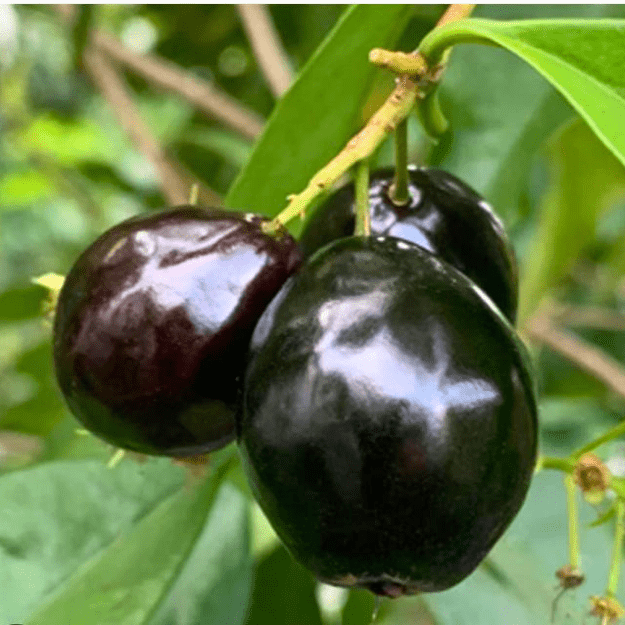
Fruit ripens from green to deep purple or almost black and should be picked when fully coloured and slightly soft. The fruit is sweet, juicy, and best eaten fresh, but is also excellent for jams, jellies, juices, and desserts.
Fruit ripens from green to deep purple or almost black and should be picked when fully coloured and slightly soft. The fruit is sweet, juicy, and best eaten fresh, but is also excellent for jams, jellies, juices, and desserts.
Pests & Diseases
Generally hardy with few serious problems. Even so, fruit flies and birds may damage ripe fruit, while scale insects, aphids, and mealybugs can occasionally occur. Root rot may develop in poorly drained soils, so good hygiene, adequate airflow, and proper drainage help minimise disease.
Generally hardy with few serious problems. Even so, fruit flies and birds may damage ripe fruit, while scale insects, aphids, and mealybugs can occasionally occur. Root rot may develop in poorly drained soils, so good hygiene, adequate airflow, and proper drainage help minimise disease.
Apply agricultural Neem Oil or Effective Microorganisms (EM Control) as part of a preventative care program to help protect plants from common pests and diseases.