Aronia Berry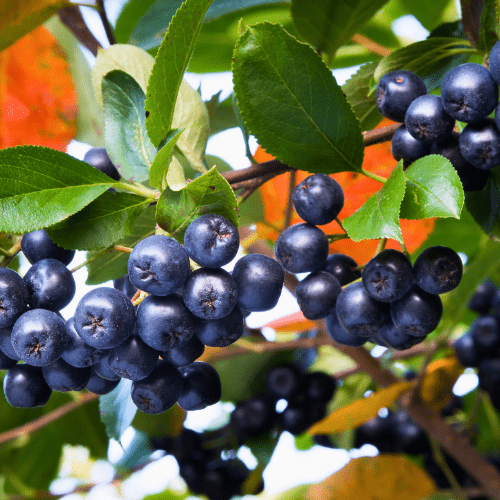
|
These bushes are easy to grow and will certainly stand out all season long. In Spring white blossoms will cover the plant, while dark green leaves embellish the bush during summer.
These purple berries are popular with birds but just like a good wine, they may not suit everyone’s taste. Due to the astringent mouth puckering flavour, it is also aptly known as the choke berry.
Aronia Berries are considered a superfood as they contain significantly more antioxidants than most fruits, including blueberries and elderberries.
An American poet loved these berries so much that he even wrote a poem about them. It was called “Blueberries”. Not sure if the name of the poem stands out much, but they are classified as a superfood.
A single blueberry bush can produce up to 6000 berries per year. Now that is more than enough reason to plant some bushes in any garden. Blueberries have a waxy coating, called a “bloom”. This acts as a barrier, protecting the blueberry skins from insects and bacteria.
Plant one of each variety, (early, mid and late season) and enjoy these fruits throughout the entire summer season.
Blueberries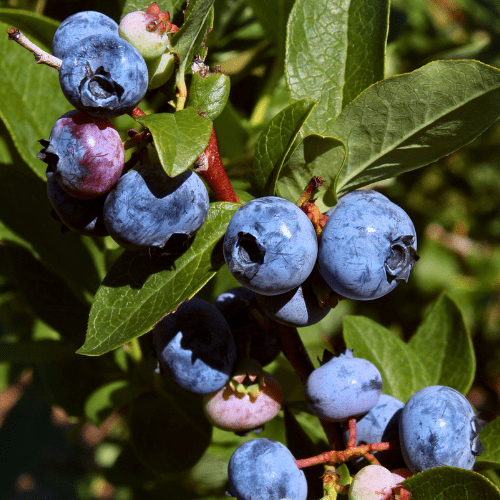
An American poet loved these berries so much that he even wrote a poem about them. It was called “Blueberries”. Not sure if the name of the poem stands out much, but they are classified as a superfood.
A single blueberry bush can produce up to 6000 berries per year. Now that is more than enough reason to plant some bushes in any garden. Blueberries have a waxy coating, called a “bloom”. This acts as a barrier, protecting the blueberry skins from insects and bacteria.
Plant one of each variety, (early, mid and late season) and enjoy these fruits throughout the entire summer season.
Cranberries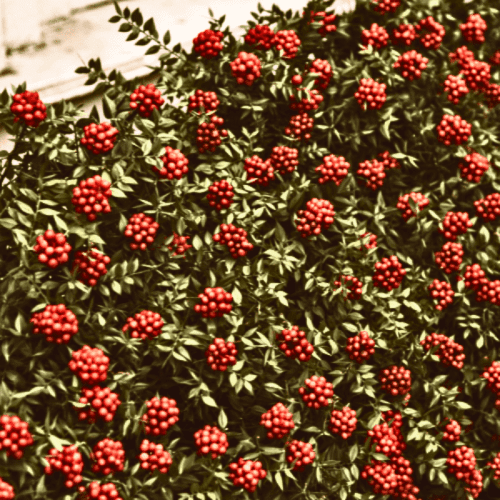
Many people have the perception that cranberries are grown in water. This is most certainly not the case, but they do consist of approximately 90% water.
Ever heard of cranberries pop? When cranberries are heated on a stovetop in water, they pop open. The longer the berries are in hot liquid, the more they break apart.
Cranberries have the ability to bounce. Next time you pick a fresh ripe cranberry, drop it to the ground and see how it bounces.
Blackberries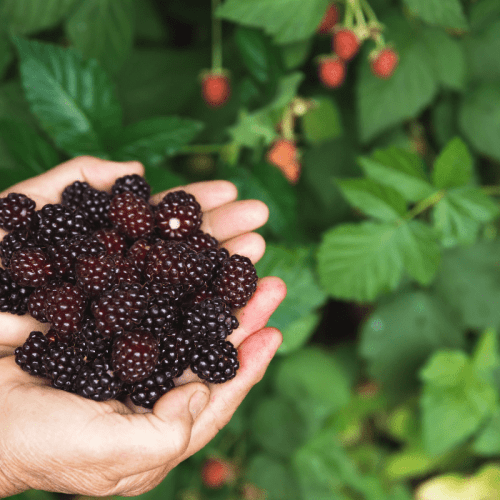
The Oxford Junior dictionary defines blackberry as mobile phone rather than some fruit, so you may be forgiven for thinking of BlackBerry phones. When it comes to blackberry fruit, they are certainly a well-deserved treat in any garden. The fruit, bark and leaves can all be consumed.
The leaves can be used to treat mild inflammation of the gums and even help with a sore throat. You can even enjoy a refreshing cup of tea, also made from the leaves of the blackberry bush.
Blackberries have also been known in history to have healing powers. During the American Civil war blackberry tea was used to cure dysentery. Reportedly more than one cease fire was called during this war, for the purpose of picking blackberries. Confederate and Union soldiers would pick these berries together, often from the same bush at the same time.
Whether you prefer the thorny bush to help with protection against intruders along the fence or just enjoy the ease of picking fruit from the thornless blackberries, there is a variety to suit your palate.
Gooseberries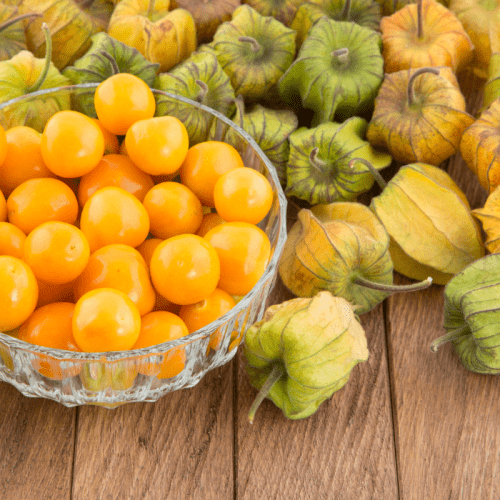
Despite using similar names, the Cape gooseberry and English gooseberry have very little in common as they are not the same plant or fruit.
The cape gooseberry, also known as goldenberries are actually more related to tomatillos. They are ground cherries with a tart flavour.
I tend to think of goldenberries as a lucky packet, an outer shell covering the golden yellow berry, barely visible from the outside.
These berries are tangy and tart, much like a cherry as they are considered tropical fruits because of their refreshing citrus taste.
English gooseberries are tart, sour and slightly sweet which makes them perfect for jams as well as fresh eating.
These berries are also known as “fayberries”. This is due to ancient belief that fairies used bushes of the gooseberries to hide from danger.
English gooseberries are mostly green in colour but there are varieties that are white, red or yellow.
They thrive in moist, heavy clay soil with a cool humid climate. Good foliage is needed to help protect the berries from the sun.
Elderberries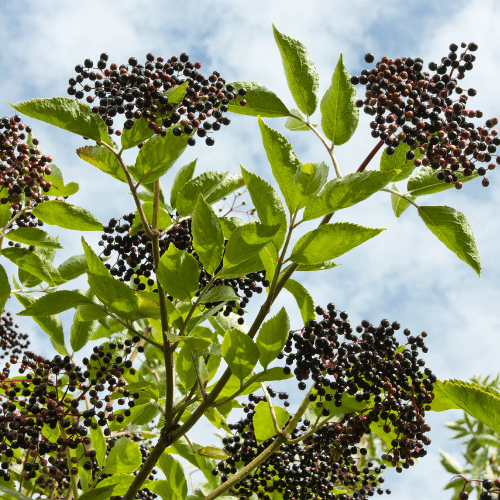
Every year, during May and June, the Romanians produce a traditional soft drink called “socatã” or “suc de soc”.
This is produced by letting the flowers macerate with water, yeast and lemon for 2-3 days. The last stage of fermentation is completed in a closed pressure proof bottle to produce a fizzy drink.
Interestingly Coca-Cola was so inspired that they launched an elderflower-based drink, Fanta Shokata.
Goji Berries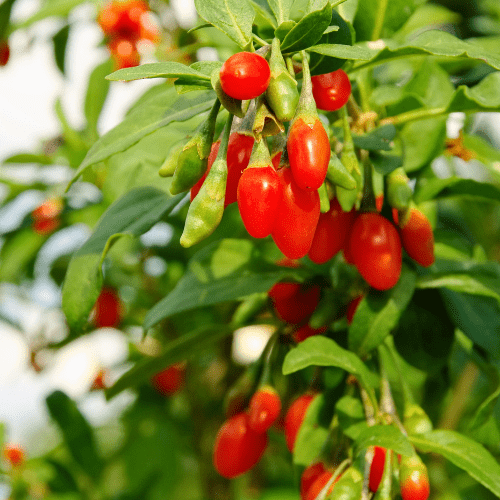
Goji berries are also known as wolfberries and have been used in ancient Chinese medicine for thousands of years. The name Goji berry has only been used since 2000.
A Chinese journal from 1994, have shown some remarkable studies. It stated that when added to the treatment of about 80 people suffering from cancer, they showed improvement.
Goji berries can be eaten raw, baked, cooked or steamed. They have a natural tinge of sweetness with a very slight herb-like aftertaste.
Red Raspberries
| According to legend, raspberries were originally white. The nymph Ida pricked her finger while picking berries for the infant Jupiter. This caused the raspberries to be tinged red with her blood.
Another myth about raspberries originates from Germany, claiming that there are magical qualities within raspberries. It is believed that to tame a bewitched horse, one would have to tie a wild raspberry twig around the horse’s body.
Unlike many other fruit unripe raspberries do not ripen after they are picked. If you really want a ripe raspberry grow your own and pick them as soon as they are ready.
Pineberries and Strawberries
|
According to legend, raspberries were originally white. The nymph Ida pricked her finger while picking berries for the infant Jupiter. This caused the raspberries to be tinged red with her blood.
Another myth about raspberries originates from Germany, claiming that there are magical qualities within raspberries. It is believed that to tame a bewitched horse, one would have to tie a wild raspberry twig around the horse’s body.
Unlike many other fruit unripe raspberries do not ripen after they are picked. If you really want a ripe raspberry grow your own and pick them as soon as they are ready.
Pineberries are a natural hybrid cross between two different strawberries. What sets them apart from strawberries is that they cannot be grown from seed.
Pineberries are the celebrities of strawberries. These white coloured strawberries have a tropical flavour with a subtle note of pineapple, pear and apricot.
What’s not to love about strawberries? They are bite size and decadently sweet. Biologically speaking they also belong to the rose family.
Fragariaphobia is known as the fear of strawberries. Yes, people can be afraid of strawberries as ridiculous as it may sound.
People adore strawberries because they are sweet, juicy, plump and incredibly nutritious. Eat them fresh, dip them in chocolate or enjoy them with cream.
Sea Buckthorn
Sea-Buckthorn is botanically known as Hippophea, meaning “shiny horse”. This was used by ancient Greeks to give their horses lustrous coats.
Needless to say, it is great for your hair. Today the oil is being used in numerous skin and hair products as it helps moisten and strenghten dry and damaged skin and hair.
Eating this berry raw will give you an incredibly tarty taste. It tastes like a blend of pineapple and passionfruit but without any of the sweetness.
Youngberries
| Youngberries are a hybrid between blackberries, raspberries and dewberries. Similar to that of a blackberry the fruit are slightly smaller and sweeter.
The berries are more succulent than blackberry varieties with a delicate texture bursting with juiciness. |
|
|
|
