Position
Full sun, sheltered – tolerates partial shade.
You can plant raspberries at any time, as long as the soil isn’t waterlogged and can withstand cold temperatures down to -10 degrees.
Size
A trellis or fence is required as it is a bramble.
Soil
Well-drained, slightly acidic.
Raspberries thrive in moisture-retentive, fertile, slightly acidic, well-drained, weed-free soil.
They dislike soggy soils and shallow chalky soils.
They prefer a pH of 5.8–6.8. Mix in decomposed compost before planting.
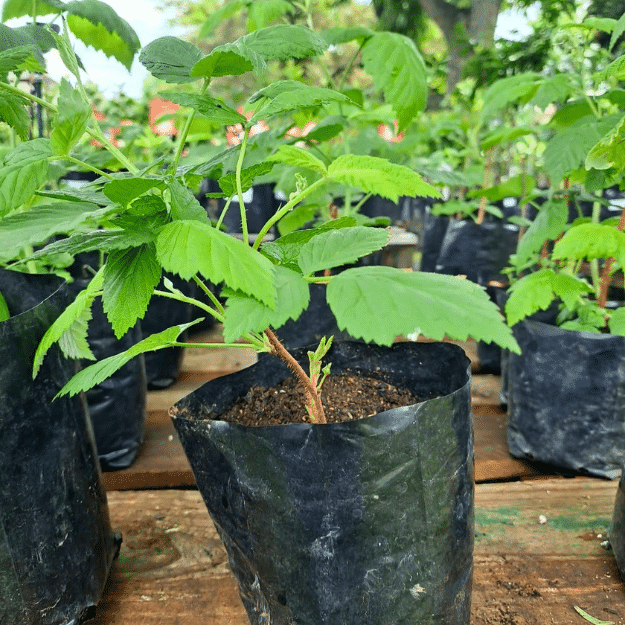
Dig a hole 50cm x 50cm deep and mix half acidic compost, half potting soil.
Place the plant directly into the soil mixture and cover it with a mulch of pine bark or pine needles, 5 – 15cm thick.
We stock Volcanic Rock Dust, which contains organic minerals and trace elements to boost soil health and increase important micro-organisms essential for healthy soil.
Mulch
Add a thick layer of pine bark mulch, keeping it about 20 to 30 centimetres away from the tree trunk (any closer may cause excess moisture and damage the trunk). This will retain the moisture in the soil and will prevent weeds from taking over.
Watering
A couple of times a week. Once a day in very hot weather. Do not overwater as this causes root rot.
Fertilising
Once in spring and again in summer with a slow-release, organic fertilizer.
Use our slow-release nitrogen-rich fertilizer, like our berry fertilizer. Apply 1 teaspoon of our berry fertilizer every 4-5 months.
Pruning
Cut back dead canes during winter. Prune fruiting canes to promote new growth.
Pests and Diseases
Aphids, citrus psylla, red scale, citrus greening. Regular spraying with Agricultural Neem Oil or Effective Microorganisms (EM Control) will help with prevention or after the fact. If you already have aphids or mites, wash the tree with a harsh hosing, and when dry, spray with Neem oil or EM Control.
Practice good garden hygiene (remove fallen fruit and leaves).
Watch for root rot (if overwatered) and fungal infections during wet periods.
PLEASE NOTE: Pine bark or pine needle mulch is a great way to lower soil pH and add organic matter, but when using it as a top mulch, make sure it doesn’t touch the plant’s branches. This may cause the branches to rot and get infected, especially with new and one- to two-year-old branches