
Position
Grow in full sun to partial shade. Purple Tea performs best in warm, humid climates with protection from strong afternoon sun in very hot regions and shelter from drying winds.
Typically grows 2–4 m high and 1.5–3 m wide if left unpruned. Regular pruning keeps plants at 1–1.5 m making harvesting easier.
Prefers deep, well-drained, fertile, acidic soil with a pH of 4.5–5.5. Avoid alkaline, waterlogged, or heavy clay soils. The soil required is very acidic: we recommend adding a bag of Acid Compost (from any nursery) as well as Lithuanian Peat Moss. Peat moss is absolutely essential to reduce the pH to this level.
Give your plants the best possible start by adding a bag of Volcanic Rock Dust (R25 per bag) to the soil. Volcanic Rock Dust helps replenish essential minerals and trace elements that have been depleted from our soils over time.
We also recommend adding a bag of Superfrass (R25 per bag) when planting. Superfrass provides a natural source of NPK and micronutrients to encourage strong, healthy growth, while also helping to improve the plant’s natural resistance to pests.
Together, these products help create a nutrient-rich growing environment and give your plants the foundation they need to establish and thrive.
Water regularly to keep the soil consistently moist, especially during dry periods. Do not allow the soil to dry out completely or remain waterlogged.
Apply a 5–10 cm layer of Pine Bark Mulch around the base to conserve moisture, suppress weeds, and maintain soil acidity. Keep mulch away from the trunk.
Feed in spring and summer with an acid-loving plant fertiliser or a balanced slow-release fertiliser. Apply 1 teaspoon every 6 months of our slow-release nitrogen-rich all plant fertiliser.
Prune after harvesting to maintain a compact, bushy shape and encourage fresh new shoots. Remove dead, damaged, or crossing branches as needed.
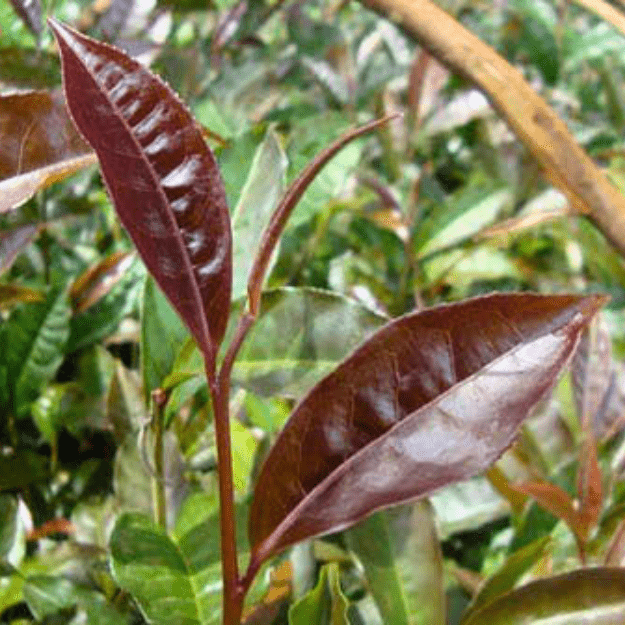
Harvest the young terminal bud and the first two to three leaves when new growth is soft and tender. Regular picking encourages continuous flushes of fresh leaves throughout the growing season.
Generally hardy but may be affected by aphids, scale insects, mites, caterpillars, and tea mosquito bugs. Root rot can occur in poorly drained soils, while fungal leaf spots may develop in humid conditions with poor air circulation. Good drainage and regular monitoring help prevent most problems.