Position:
Plant in full sun to partial shade. Uvaia plants are adaptable and relatively low-maintenance, thriving in both containers and the garden. Space plants about 2–3 m apart to allow for healthy growth and airflow. They tolerate mild frost once established, but should be protected when young.
Soil:
Prefers rich, well-composted, free-draining soils.
Add organic matter, such as compost, to improve soil structure, drainage, and moisture retention. Adding half a bag of our Volcanic Rock Dust (R25 per bag) and a bag of Superfrass (R25 per bag) will promote vigorous growth and naturally strengthen root health.
Watering:
Requires regular watering, especially during flowering and fruit development, but does not tolerate waterlogged soil.
Keep the soil consistently moist during hot weather while ensuring excess water drains away freely.
Mulching:
Apply a thick layer of Pine Bark Mulch, approximately 5 cm thick, around the base of the plant while keeping it away from the trunk. Mulching helps retain soil moisture, regulate soil temperature, and suppress weeds.
Fertilising:
Apply 3 teaspoon of all-plant fertilizer every 4–5 months. Uvaia responds well to organic feeding and compost applications during the growing season.
Pruning:
Lightly prune after fruiting or in early spring to maintain shape, improve airflow, and encourage healthy new growth. Remove any dead or overcrowded branches.
Pests & Diseases
Regular inspection and preventative care are important for managing pests such as aphids, scale insects, and red spider mites, as well as fungal diseases that may occur in humid conditions.
Agricultural Neem Oil or Effective Microorganisms (EM Control ) can assist with prevention and treatment. If pests are present, wash the plant thoroughly with a strong spray of water, allow it to dry, and then apply Neem Oil or EM Control.
Harvesting
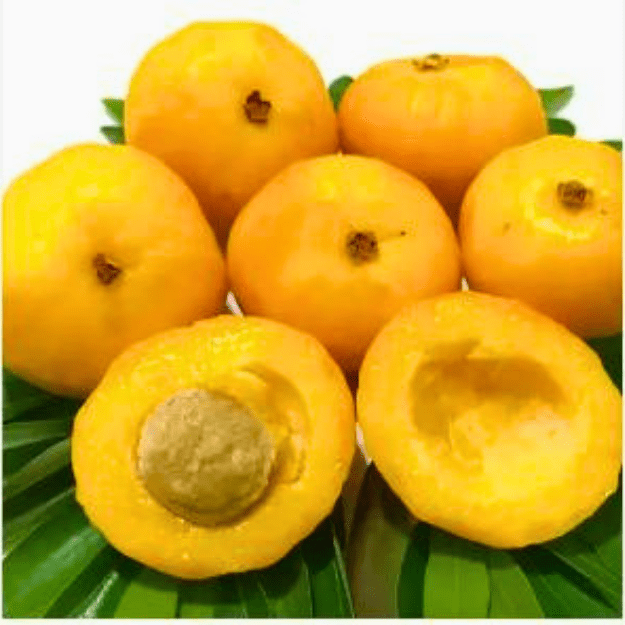
Fruit is ripe when it turns deep yellow to orange and releases a fragrant tropical aroma. Harvest gently by hand once the fruit softens slightly. Fruiting generally occurs from late summer into autumn.