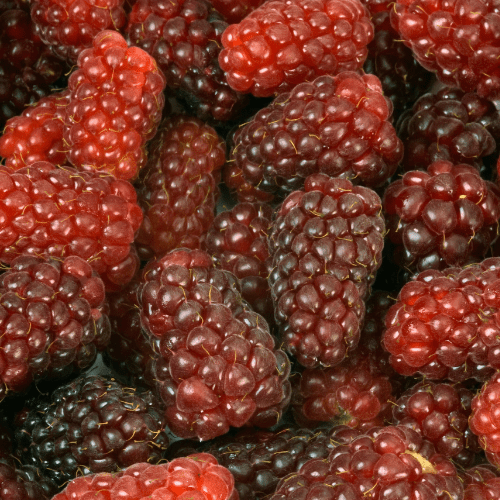

Growing Information for Tayberry Plants:
Position
Plant your tayberry bush in full sun or semi-shade. It is cold-hardy and can tolerate low temperatures but not extreme cold in winter.
Size
This bramble requires a trellis or fence to grow on. Give each bush about 2.5 metres of space around it to grow easily.
Soil
Dig a 50cm x 50cm deep hole and add a bag of acid compost with the ultimate soil combination for your Tayberry.
Plant:
Submerge the pot in water for 10 minutes before transplanting.
We stock volcanic rock dust containing trace elements and organic minerals to boost your soil’s health and increase essential micro-organisms. Berry Mix, volcanic rock dust, Pine bark mulch are all good to have for your soil.
Watering
Give your plant a good soaking every 2 to 3 days, if there has been no rain.
Mulching
Use from 2 to 5 centimetres of pine bark mulch to protect the roots from UV damage and drying out. It retains moisture, and maintains an optimal pH. Do not let the mulch touch the plant stem, as it may cause infection or rot.
Fertilising
Apply 1 teaspoon every 4-5 months of our slow-release all-plant fertiliser. The roots will absorb what they need.
Pruning
Prune your tayberry lightly in winter, focusing on removing the dead and diseased canes.
Pests and Diseases
Aphids, citrus psylla, red scale, citrus greening. Spraying regularly with Agricultural Neem Oil or Effective Microorganisms (EM Control ) will assist in either prevention or after the fact. If you already have aphids or mites, wash the tree with a harsh hosing, and when dry, spray with Neem oil or EM Control.
Practice good garden hygiene (remove fallen fruit and leaves).
Watch for root rot (if overwatered) and fungal infections during wet periods.
Harvesting
Pick the berry with its stalk. It’s ready to pick when it gives under a little pressure and has achieved full colour.