
Position
Plant your orange tree in a spot that enjoys full sun and adequate protection from the wind. To allow them to grow unhindered, your trees should be planted 4.5 to 6.5 meters apart.
Size
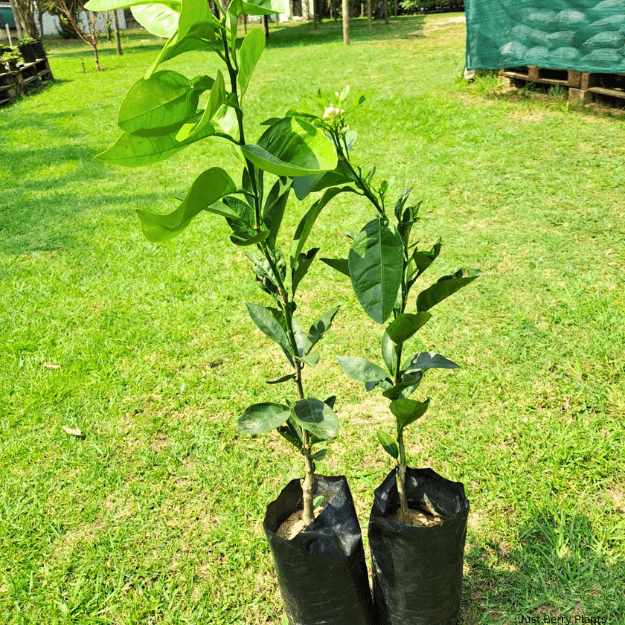
The Newhall orange is a semi-dwarf tree that grows to 3-4 meters tall. However, these oranges can also be grown in a pot (at least 55 liters in capacity). Orange trees do not like their roots to be disturbed. So, don’t plant other trees, bushes, or flowers too near them.
Soil Type
Orange trees need healthy and well-drained soil. Add acid compost to the hole that you dig for your tree so that it is in prime condition to nourish the roots. If you’re opting for a pot, use good-quality potting soil, add a bag of acid compost, and choose a pot with good drainage.
Watering
Orange trees require regular watering; those in pots need it even more. Young trees should be watered every 2 – 3 days. When mature, water once or twice a week, depending on weather conditions.
Mulching
Citrus trees thrive with pine bark mulch, which protects the roots and helps retain moisture and soil acidity. Leave a space between the stem or trunk of the tree to avoid the trunk possibly becoming diseased.
Fertilising
Give your orange trees the best chance by fertilizing them well. Apply three teaspoons of our slow-release fertilizer every 3-4 months. Although it is called berry fertilizer, it is suitable for all plants and trees.
Pruning
Your orange tree will only need to be pruned to remove dead or diseased limbs, or those that are too close to the ground (around 30 centimeters or less).
Pests and Diseases
It is essential to watch out for pests such as aphids, scale insects, and mites. Remove any bubbly leaves and dispose of them immediately. We recommend Effective Microorganisms to prevent the spread of these pests and diseases. Hose the tree first to remove the aphids, and then spray generously with EM Control. As the tree grows larger, it will be healthy, and pests will be a thing of the past.
Harvesting
These trees can be harvested from early spring to summer and usually continue to bear fruit for decades. The fruits should be fairly easy to pluck from the tree if you gently twist it from the branch.