Position
Plant in full sun for best growth and fruit production. Protect from strong winds, which can damage leaves and fruiting stems.
Plant in full sun for best growth and fruit production. Protect from strong winds, which can damage leaves and fruiting stems.
Size
Typically grows 3–4 metres tall with a spread of 2–3 metres. Forms large clumps through the production of suckers.
Typically grows 3–4 metres tall with a spread of 2–3 metres. Forms large clumps through the production of suckers.
Soil
Prefers deep, fertile, well-drained soil rich in organic matter. Grows best in slightly acidic to neutral soils (pH 5.5–7.0). Add a bag of acid compost.
Prefers deep, fertile, well-drained soil rich in organic matter. Grows best in slightly acidic to neutral soils (pH 5.5–7.0). Add a bag of acid compost.
Give your plants the best possible start by adding a bag of Volcanic Rock Dust (R25 per bag) to the soil. Volcanic Rock Dust helps replenish essential minerals and trace elements that have been depleted from our soils over time.
We also recommend adding a bag of Superfrass (R25 per bag) when planting. Superfrass provides a natural source of NPK and micronutrients to encourage strong, healthy growth, while also helping to improve the plant’s natural resistance to pests.
Together, these products help create a nutrient-rich growing environment and give your plants the foundation they need to establish and thrive.
Watering
Requires regular watering to maintain consistent soil moisture, especially during hot weather and fruit development. Avoid waterlogged conditions.
Requires regular watering to maintain consistent soil moisture, especially during hot weather and fruit development. Avoid waterlogged conditions.
Mulching
Apply a thick layer of Pine Bark Mulch around the base to conserve moisture, suppress weeds, and improve soil fertility. Keep mulch away from the main stem to prevent rot.
Apply a thick layer of Pine Bark Mulch around the base to conserve moisture, suppress weeds, and improve soil fertility. Keep mulch away from the main stem to prevent rot.
Fertilising
Feed regularly with a balanced fertiliser rich in potassium and organic matter. Apply compost or well-rotted manure several times a year to support vigorous growth and fruiting.
Feed regularly with a balanced fertiliser rich in potassium and organic matter. Apply compost or well-rotted manure several times a year to support vigorous growth and fruiting.
Pruning
Remove dead, damaged, or diseased leaves as needed. After harvesting, cut down the spent fruiting stem and allow one or two healthy suckers to develop as replacement plants.
Remove dead, damaged, or diseased leaves as needed. After harvesting, cut down the spent fruiting stem and allow one or two healthy suckers to develop as replacement plants.
Harvesting
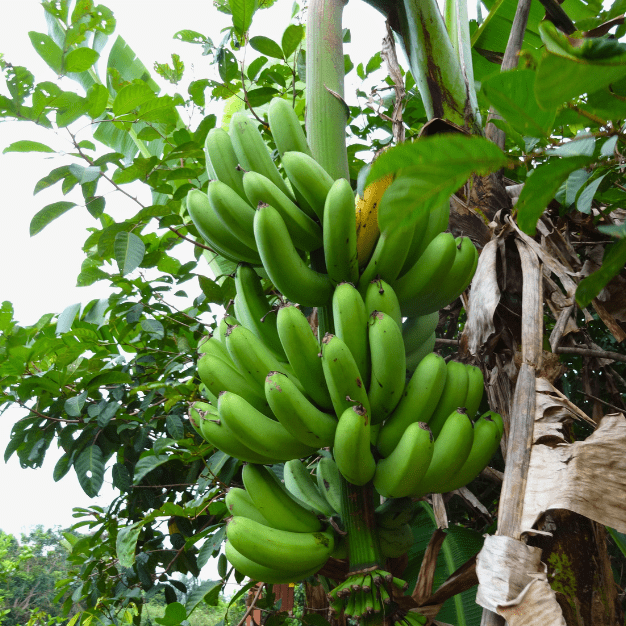
Fruit is usually ready for harvest 10–14 months after planting, depending on climate and growing conditions. Harvest bunches when the fruit is full-sized and beginning to lose its angular shape.
Fruit is usually ready for harvest 10–14 months after planting, depending on climate and growing conditions. Harvest bunches when the fruit is full-sized and beginning to lose its angular shape.
Pests & Diseases
Generally, it is more disease-resistant than many traditional banana varieties. May occasionally be affected by banana weevils, nematodes, aphids, scale insects, and caterpillars. Good sanitation, proper spacing, and healthy soil help minimise pest and disease problems. Apply agricultural Neem Oil or Effective Microorganisms (EM Control) as part of a preventative care program to help protect plants from common pests and diseases.
Generally, it is more disease-resistant than many traditional banana varieties. May occasionally be affected by banana weevils, nematodes, aphids, scale insects, and caterpillars. Good sanitation, proper spacing, and healthy soil help minimise pest and disease problems. Apply agricultural Neem Oil or Effective Microorganisms (EM Control) as part of a preventative care program to help protect plants from common pests and diseases.