Position:
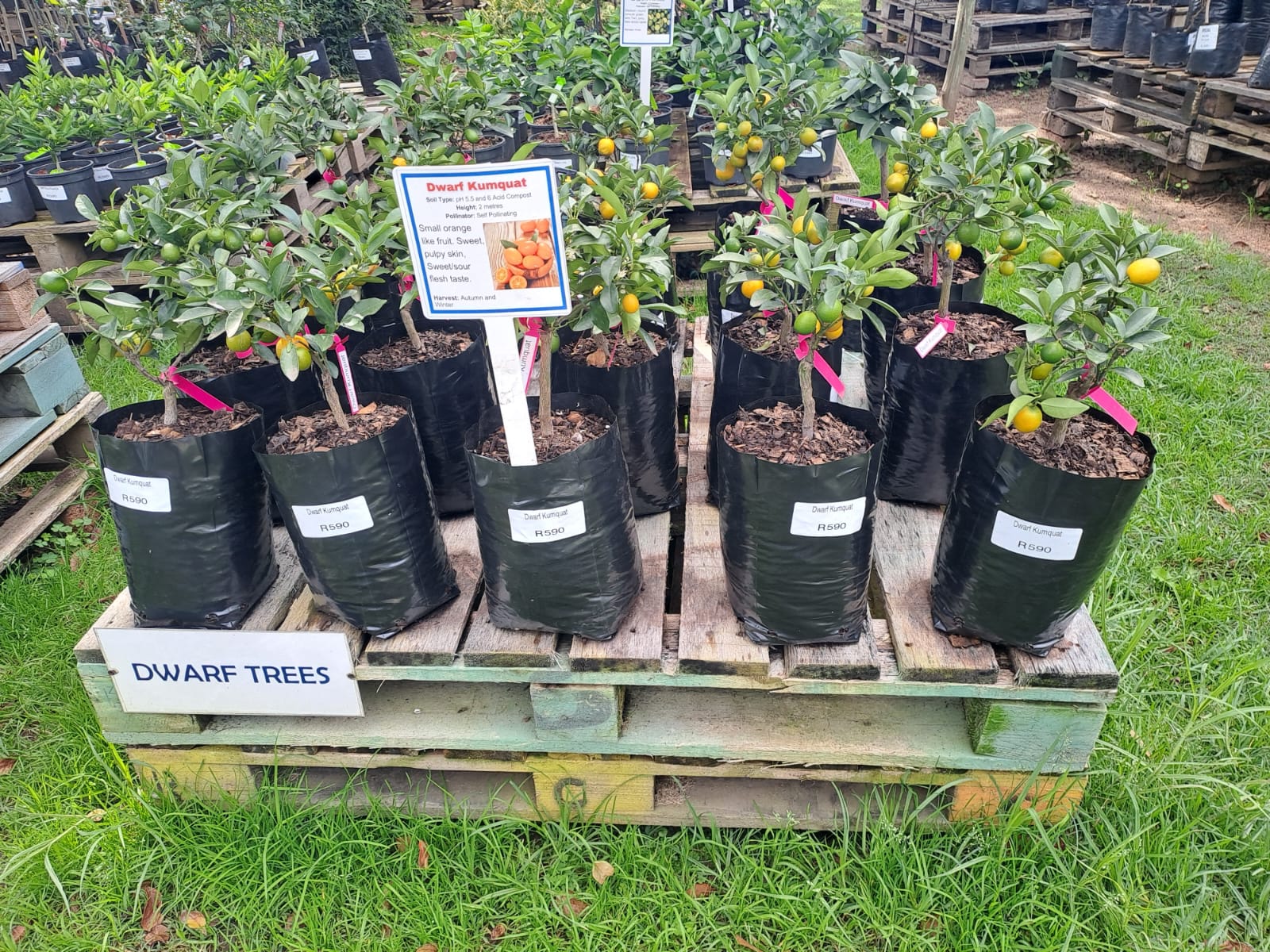
Dwarf Nagami Kumquat trees thrive in full sun and require at least 6–8 hours of sunlight daily for healthy growth and good fruit production. They can tolerate coastal conditions but benefit from protection against strong winds and excessive salt exposure.
Nagami kumquats are relatively cold-hardy compared with many other citrus varieties and can tolerate brief periods of temperatures below freezing. However, young trees and container-grown trees are more sensitive to cold and should be protected from frost and severe cold.
Plant your tree in a warm, sheltered position, such as near a wall or building, where it is protected from cold winds. Allow about 2–3 meters of space around the tree to allow healthy growth and good airflow.
Soil Type:
Nagami Kumquat trees grow best in fertile, well-drained, slightly acidic soil, ideally with a pH of approximately 5.5 to 6.5. Add a bag of acid compost to adjust the pH.
Sandy loam is ideal, but citrus can grow successfully in a range of soil types as long as drainage is excellent. Improve heavy clay soil before planting, as constantly wet soil can cause root problems.
For container growing, use a high-quality, free-draining potting mixture enriched with organic matter. Good drainage is essential, and the container must have adequate drainage holes.
Give your plants the best possible start by adding a bag of Volcanic Rock Dust (R25 per bag) to the soil. Volcanic Rock Dust helps replenish essential minerals and trace elements that have been depleted from our soils over time.
We also recommend adding a bag of Superfrass (R25 per bag) when planting. Superfrass provides a natural source of NPK and micronutrients to encourage strong, healthy growth, while also helping to improve the plant’s natural resistance to pests.
Together, these products help create a nutrient-rich growing environment and give your plants the foundation they need to establish and thrive.
Dwarf Nagami Kumquat trees grow to approximately 2 metres tall, depending on growing conditions and pruning.
When growing in a container, choose a pot at least 50 cm in diameter and depth, larger if possible, with adequate drainage holes. Repot every 2–3 years, or when the roots become crowded, to refresh the growing medium and allow continued healthy growth.
Watering:
Water regularly, particularly during hot or dry periods. Established trees generally need watering about once a week when there has been no rainfall, although container-grown trees may require more frequent watering.
Water deeply and thoroughly, then let the top few centimeters of soil dry slightly before watering again. Avoid keeping the soil constantly wet, as this can lead to root rot.
Fertilising
Dwarf lime trees will thrive with our slow release all plant fertiliser, apply one teaspoon every 4-5 months.
Citrus trees require a good supply of nutrients to support healthy foliage, flowering and fruit development, but avoid excessive fertilising, particularly when growing the tree in a container.
Pests and Diseases
Watch for common citrus pests including aphids, citrus psylla, scale insects and mites. Citrus greening is a serious citrus disease associated with infected citrus psyllids, so symptoms should not be ignored.
Spraying regularly with Agricultural Neem Oil or Effective Microorganisms (EM Control ) will assist in either prevention or after the fact. If you already have aphids or mites, wash the tree with a harsh hosing, and when dry, spray with Neem oil or EM Control.
Practice good garden hygiene by removing fallen fruit, leaves, and diseased plant material. Avoid overwatering and ensure excellent drainage to reduce the risk of root rot and fungal diseases, particularly during prolonged wet periods.
Harvesting:
Nagami Kumquats are ready to harvest when the fruit has developed a bright orange colour and feels slightly soft when gently squeezed. The fruit has a sweet, edible peel and tart, acidic flesh, giving it its characteristic sweet-and-sour flavour.
Nagami kumquats can be eaten whole or used in marmalades, preserves, desserts, drinks, and savoury dishes. Harvest the fruit by gently twisting it from the tree or using clean pruning shears, taking care not to damage the branches.