
Plant in full sun and choose a warm, sheltered position that is protected from frost and strong winds.
This plant is fast-growing, reaching about 6–12 m tall and 3–6 m wide.
Well-drained, fertile soil enriched with organic matter. Can add a bag of acid compost with a pH of 5.5–7.0.
Water regularly while establishing. Once established, the tree is moderately drought-tolerant but produces better growth and fruit with consistent watering during dry periods.
Apply 2 to 5cms of pine bark mulch to protect the roots from UV damage and drying out. It retains moisture and maintains an optimal pH. Do not let the mulch touch the plant stem, as it may cause infection or rot.
Soil Type
Prefers well-drained, fertile soil enriched with organic matter. Adaptable to sandy, loamy, and slightly clay soils with a pH of 5.5–7.0.
Adding half a bag of our Volcanic Rock Dust (R25 per bag) and a bag of Superfrass (R25 per bag) will assist in rapid growth. They also protect the roots from being eaten by insects.
Watering
Water regularly while establishing. Once established, the tree is moderately drought-tolerant but will produce better growth and fruit with consistent watering during dry periods.
Mulching
Apply a layer of organic mulch around the base of the tree to conserve moisture, suppress weeds, and regulate soil temperature. Keep mulch away from the trunk.
Fertilising
Use our slow-release nitrogen-rich all plant fertiliser. Apply 3 teaspoons every 4 months. The roots will absorb what they required.
Pruning
Prune annually to maintain shape and size, improve airflow, and encourage branching. Remove any dead, damaged, or crossing branches.
Harvesting
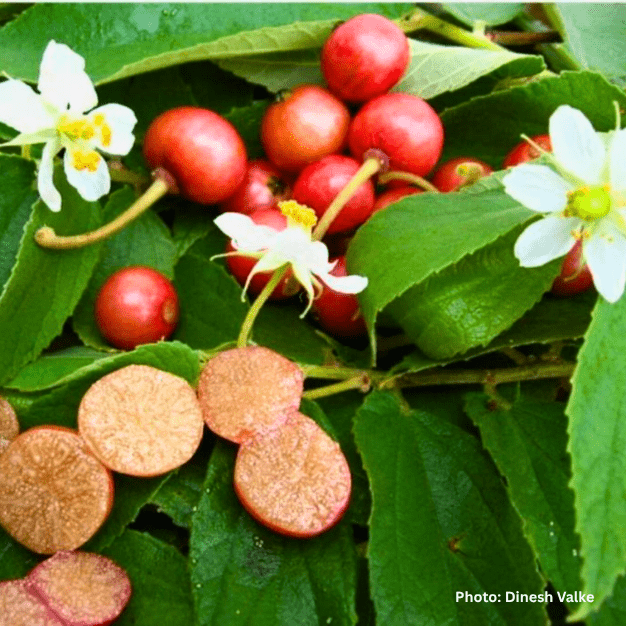
Fruit ripens from green to bright red and can be harvested when fully coloured and soft. The sweet berries are best eaten fresh and should be picked regularly as they ripen.
Pests & Diseases
Generally pest and disease resistant. May occasionally be affected by fruit flies, leaf spot, or root rot in poorly drained soils. Treat promptly or preferrably use preventative measures by spray with agricultural Neem Oil or Effective Microorganisms (EM Control)


