Position
Full sun to light shade. Best planted in a warm, frost-free position with protection from severe cold. Well suited to coastal gardens and can tolerate salty winds.
Full sun to light shade. Best planted in a warm, frost-free position with protection from severe cold. Well suited to coastal gardens and can tolerate salty winds.
Size
A medium to large evergreen tree, usually growing 6–12 m high and spreading 4–8 m wide, depending on climate and growing conditions.
A medium to large evergreen tree, usually growing 6–12 m high and spreading 4–8 m wide, depending on climate and growing conditions.
Soil Type
Prefers well-drained sandy, sandy loam, or loamy soil enriched with organic matter. It grows best in slightly acidic to neutral soil but is adaptable if drainage is good.
Prefers well-drained sandy, sandy loam, or loamy soil enriched with organic matter. It grows best in slightly acidic to neutral soil but is adaptable if drainage is good.
Adding half a bag of our Volcanic Rock Dust (R25 per bag) and a bag of Superfrass (R25 per bag) at planting time helps replenish essential minerals and nutrients in the soil, encourages vigorous growth, and provides natural protection against root-feeding insects.
Watering
Water regularly while young to help establish a strong root system. Once established, Beach Apricot is fairly hardy, but it will perform best with deep watering during extended dry periods. Avoid waterlogged soil.
Water regularly while young to help establish a strong root system. Once established, Beach Apricot is fairly hardy, but it will perform best with deep watering during extended dry periods. Avoid waterlogged soil.
Mulch
Apply a layer of Pine Bark Mulch around the base to retain moisture, regulate soil temperature, and suppress weeds. Keep mulch away from the trunk to prevent rot.
Apply a layer of Pine Bark Mulch around the base to retain moisture, regulate soil temperature, and suppress weeds. Keep mulch away from the trunk to prevent rot.
Fertilising
Feed with our slow-release nitrogen-rich all plant fertiliser. Apply 3 teaspoon every 4-5 months.
Feed with our slow-release nitrogen-rich all plant fertiliser. Apply 3 teaspoon every 4-5 months.
Pruning
Prune lightly to shape the tree and remove any dead, damaged, or crossing branches. Best done after fruiting or during the warmer growing season.
Prune lightly to shape the tree and remove any dead, damaged, or crossing branches. Best done after fruiting or during the warmer growing season.
Harvesting
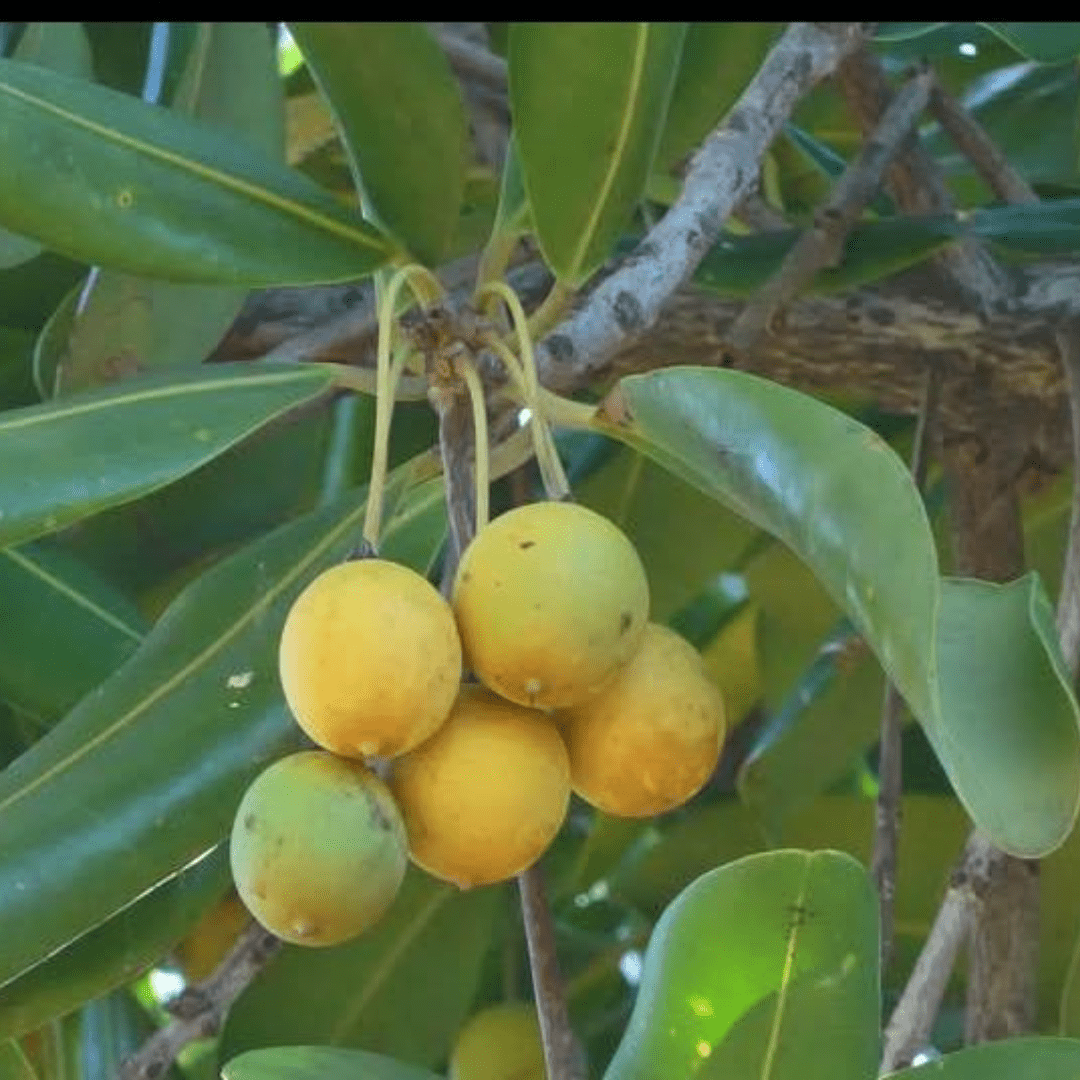
Fruit is ready to harvest when it develops full colour and softens slightly on the tree. Pick carefully by hand to avoid bruising.
Fruit is ready to harvest when it develops full colour and softens slightly on the tree. Pick carefully by hand to avoid bruising.
Pests & Diseases
Generally hardy and pest-resistant. Occasionally affected by aphids, scale insects, or fungal diseases in humid conditions. Ensure good airflow and avoid overwatering to minimize problems.
Apply agricultural Neem Oil or Effective Microorganisms (EM Control) as part of a preventative care program to help protect plants from common pests and diseases.