
Position
A tropical plant that does well in dappled shade.
Size
An upright herb with large dark green leaves.
Soil Type
Deeply dug, moist soil with generous amounts of well-aged compost or farmyard manure, is ideal. A slightly acidic soil with a pH 6.0 – 7.0 is recommended.
Give your plants the best possible start by adding a bag of Volcanic Rock Dust (R25 per bag) to the soil. Volcanic Rock Dust helps replenish essential minerals and trace elements that have been depleted from our soils over time.
We also recommend adding a bag of Superfrass (R25 per bag) when planting. Superfrass provides a natural source of NPK and micronutrients to encourage strong, healthy growth, while also helping to improve the plant’s natural resistance to pests.
Together, these products help create a nutrient-rich growing environment and give your plants the foundation they need to establish and thrive.
Watering
In the summer months it is essential to water tumeric plants at least, three times per week. In winter when the leaves have died down and to keep the ground warm, cover with compost rich in organic matter and then with leaves. Water once a week in winter.
Mulching
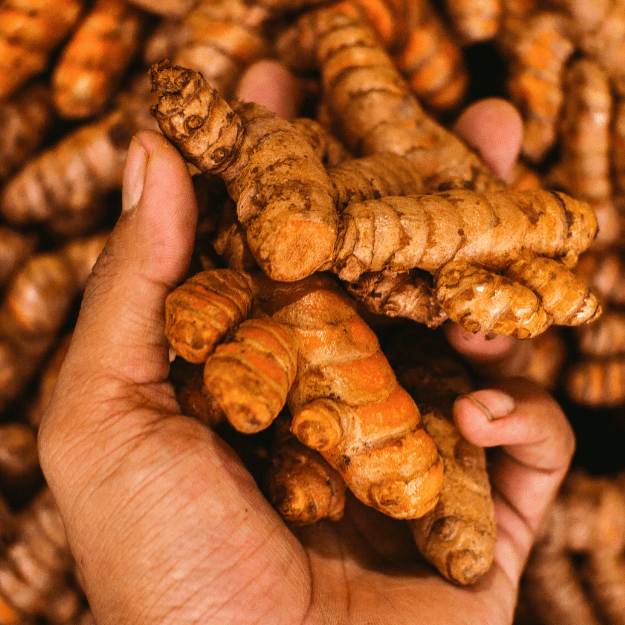
A thick layer of pine bark mulch, keeping it about 20 to 30 centimetres away from leaves helps retain moisture in the soil and prevents weeds. Adding a 5 cm layer of compost every few months around the base of the stems (hilling) encourages rhizome growth.
Fertilising
Using 1 teaspoons every 4 months of our all-plant fertiliser has the perfect balance of nitrogen-phosphorus-potassium (NPK). Also add compost throughout the growing season to maximise rhizome development.
Pruning
No pruning is needed as the leaves die back completely in winter.
Harvesting
Pests & Diseases
The most destructive threats to turmeric crops are Rhizome Rot (Soft Rot), which decays the underground harvest, and the Shoot Borer, which destroys the plant stems. Because turmeric (Curcuma longa) is grown primarily for its underground rhizomes, both foliar diseases and subterranean pests can drastically reduce overall crop yield. Best to keep a watch and preferably use preventative measures by spraying with agricultural Neem Oil or Effective Microorganisms (EM Control).