Position
Cashew Nut trees enjoy well-drained sandy soil. These are tropical trees and will thrive in a very hot climate. Ensure you have sufficient space for this tree as the roots spread over 4m laterally and 2m vertically from the soil surface.
Size
Cashew Nut tree roots can grow up to 14 mts in length. Planting distances for the first three years should be 8 x 5 mts. After that, a more permanent distance is recommended, between 10 and 12 mts apart.
Soil
Cashew nut trees enjoy slightly acidic soil with a pH between 5.5 and 7.5. Use a bag of acid compost to your soil to ensure a good pH.
Mulching
Add a thick layer of pine bark mulch, keeping it about 20 to 30 centimetres away from the tree trunk (any closer may cause excess moisture and damage the trunk). This will retain the moisture in the soil and will prevent weeds from taking over.
Fertilising
Manure can be added to your soil before planting. Thereafter, use our slow-release nitrogen-rich fertiliser, like our all plant fertiliser Apply 1 teaspoon every 4-5 months.
Pests and Diseases
- Anthracnose: Causes dark spots on leaves, flowers and young fruit, often leading to blossom and fruit damage.
- Powdery mildew: Produces a white powdery coating on leaves and flower clusters, affecting flowering and fruit development.
- Dieback (Pink Disease): Causes branches to develop whitish or pinkish fungal growth, followed by shoots drying and dying back.
- Inflorescence blight: Causes flowers and flower stalks to turn brown and dry out.
- Root rot: Often associated with poorly drained or excessively wet soil, causing yellowing, wilting, and decline.
Spraying regularly with Agricultural Neem Oil or Effective Microorganisms (EM Control ) will assist in either prevention or after the fact. If you already have aphids or mites, wash the tree with a harsh hosing, and when dry, spray with Neem oil or EM Control.
Harvesting
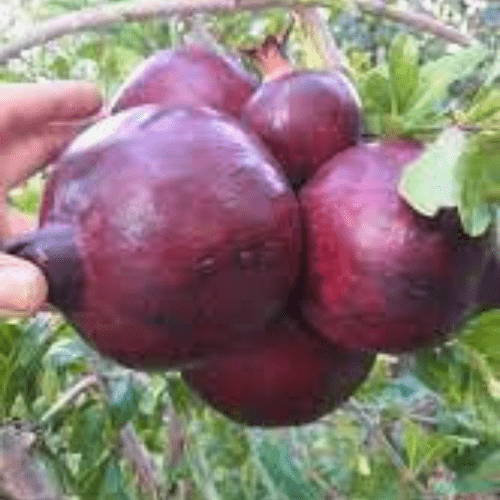
Cashew nut shells are attached to the bottom of the apple, forming fully in the dry season. These nuts are twisted and removed from the apples by hand.